Fluency tips
Getting Older, Post 3: The Percussion Section (a.k.a. My Knees and Hips)
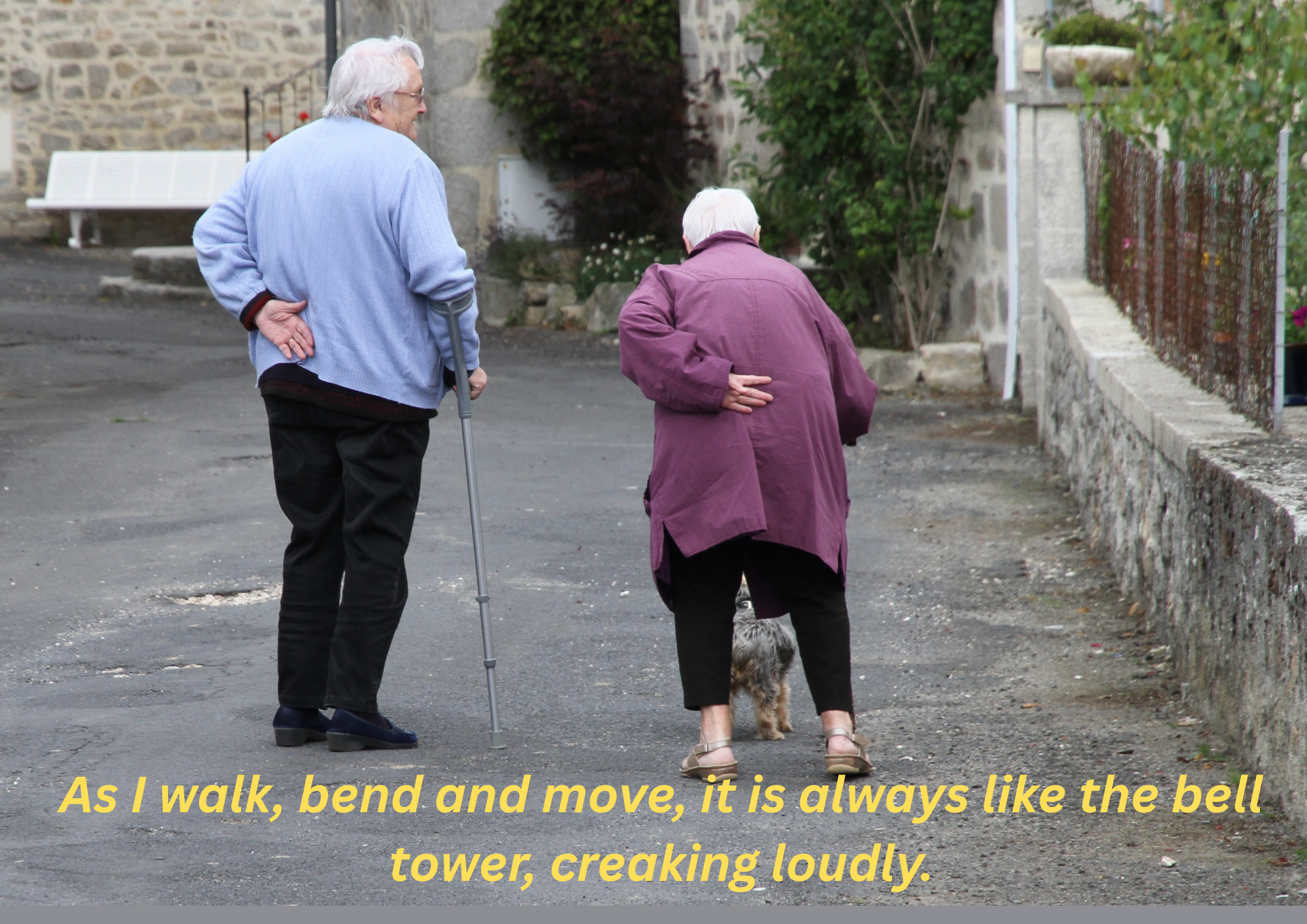
You know what I am talking about, your body defied gravity everytime You could jump up, speed walk, sit for hours double cross legged without a sound. Try that today! Stand up after sitting too long, and your knees announce it to the whole room like a tiny fireworks display. Today: why your joints crack, whether it's actually bad for you, but it's like the church bell tower.
Getting Older, Post 3: The Percussion Section (a.k.a. My Knees and Hips)
Since a few years ago, I could hear my husband walking down the passage, getting up, sitting down, it was a cracking sound as he walked, crack um crack um. To me it was normal. I could walk up a flight of of stairs, tippy toe round the home, give people a fright, and it was hilarious, because it was silent. Like a ghost I would suddenly appear. My body has beaten me to the punch. It shouts out to everyone, "Sue is on her way, crack - crack - crack, one day it sounds from the knee, 2 days later, it sounds like its my hip, more like a thud. Glup one Glup one". It seems I trained my bones well, when I excercise, I dont need some background music, I am a dual package. I thought no one heard it, until my husband advertised to everyone, " You know your bones are clicking?" Really!
The Science: What's Actually Making That Sound?
That satisfying (or alarming, depending who's listening) crack isn't your bones grinding together, and it isn't your joints "wearing out." Your joints are cushioned by a lubricating fluid called synovial fluid, which contains dissolved gases which is mostly carbon dioxide, nitrogen, and oxygen. When you stretch or bend a joint suddenly, the space inside the joint capsule expands, pressure drops, and those dissolved gases rapidly form a tiny bubble. That bubble popping is the actual "crack" you hear, a process with the wonderfully dramatic name tribonucleation.
Here's the part that surprises most people: cracking your joints, on its own, has not been shown to cause arthritis or joint damage, according to the research on this. It happens more often as we age, simply because our joints undergo natural changes, slightly less cartilage cushioning, and ligaments that have loosened a little over the decades, which makes that gas bubble easier to trigger.
And once again, this isn't just a human quirk. Joint cracking happens across many animals with similar joint structures. Growing older and creakier is, quite literally, a universal experience for anything with a skeleton.
English Corner: Bone and Joint Idioms
"Knuckle down" means to start working seriously. "It's time to knuckle down and finish this project."
"Get a leg up" means to get an advantage. "That internship gave her a leg up in the job market."
"Bone-tired" means extremely exhausted. "After that hike, I was bone-tired."
Try this today: Use one of these three idioms out loud, about your actual day, bonus points if your knees agree with the theme.
Question: What actually causes the "crack" sound in your joints?
What actually causes the "crack" sound in your joints?
Answer: A gas bubble forming and popping inside the joint's synovial fluid, a process called tribonucleation, not your bones rubbing together.