The Self-Improvement Trap
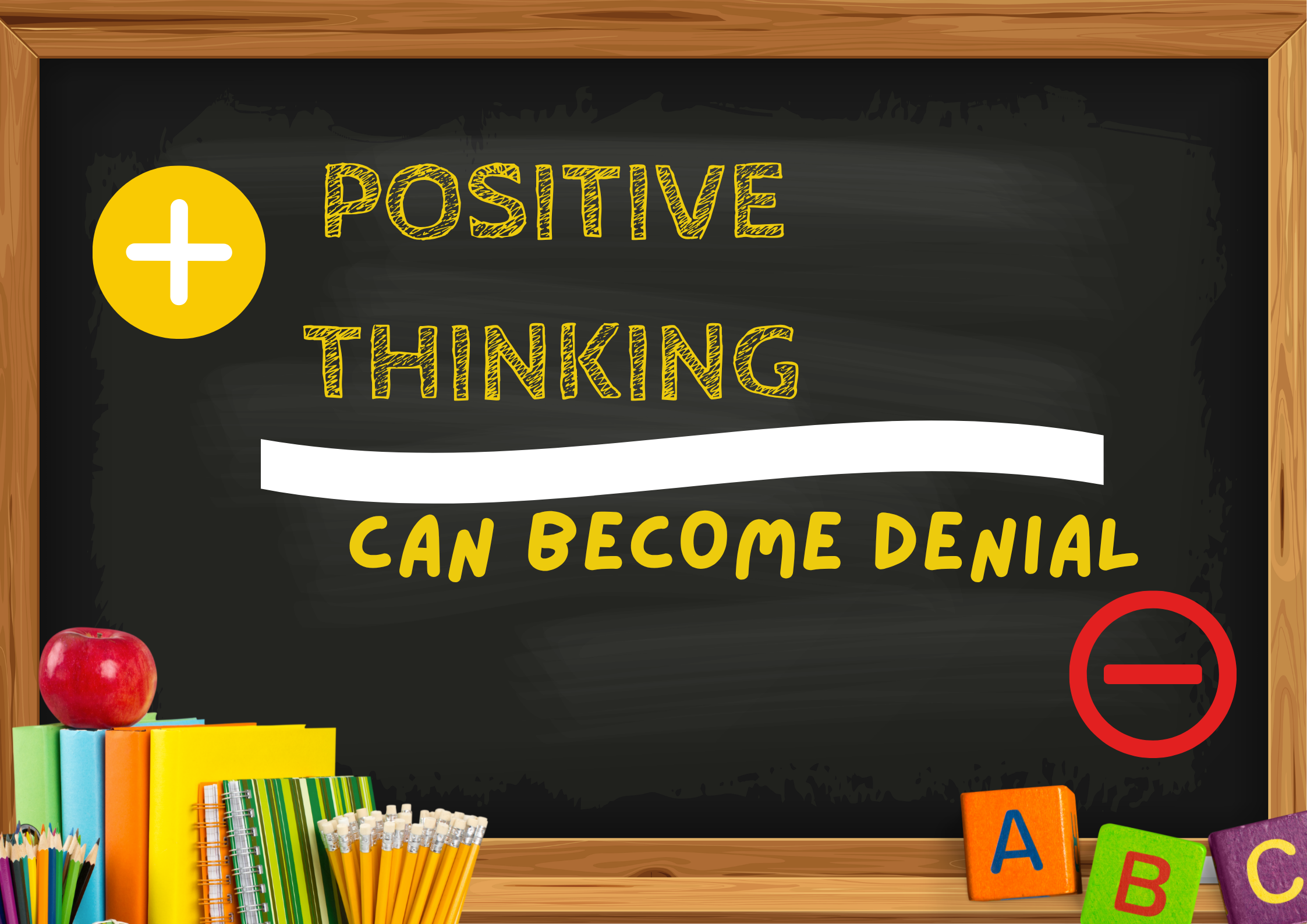
Positive Thinking Can Become Denial
The Self-Improvement Trap
“Just think positive.” “Good vibes only.” “Say it every morning and it will come true.” It all sounds so kind.
But for some people, it makes things worse.
In a well-known experiment, people with low self-esteem who repeated “I am a lovable person” felt worse afterwards than people who did not repeat it.
What People Say....
Positive thinking changes everything. If you believe it, you will achieve it.
Research
In 2009, psychologist Joanne Wood and her colleagues tested positive self-statements. People with high self-esteem felt a little better after repeating “I am a lovable person.” But people with low self-esteem felt worse. The researchers suggested that the sentence clashed with what these people really believed, so it reminded them of how far away they felt from it.
Another researcher, Gabriele Oettingen, found that people who only imagine a perfect future often put in less effort. Her work suggests that it is better to imagine your goal and the obstacles on the way. She calls this mental contrasting.
Hope needs a plan. A dream without obstacles is just a daydream.
The Usual Blah, Blah, Blah
Positive-thinking messages sound kind, but they hide a rule: do not feel bad. If you feel sad, scared or angry, you are “doing it wrong.”
This is sometimes called toxic positivity. It can make people hide their real feelings and ignore real problems. Every human being is different, reacts differently and not every sing song works for all.
Experience
A man loses his job. Everyone tells him: “Stay positive!” He smiles and says he is fine. At night, he cannot sleep. He is not allowed to be afraid, so he cannot plan properly for what is coming.
My Question
Is this optimism, or is it a polite way of looking away from the problem?
On the Other Hand
Optimism can be healthy. Hope helps people keep going, and a positive attitude helps in many situations. Oettingen's work does not say “be negative.” It says: be realistic as well as hopeful.
The difference is between hope with a plan and hope that replaces a plan.
The Stark Reality - Truth
Partly true. Positive thinking can help when it is paired with honesty about problems and a plan for action. On its own, it can become denial.
The Significance
What does it promise? That thinking positive thoughts will make good things happen.
What does the evidence show? That repeating positive sentences can backfire for people with low self-esteem, and that imagining only success can reduce effort.
What should you do? Imagine the goal, then look honestly at the obstacle, then make a plan for it.
Be Brave.
What is one problem you have been calling “fine” that you could look at honestly this week?
English Lesson: Hope, Honesty and Possibility
Every article on this blog is also an English lesson. Read slowly, say the new words out loud, and use them today.
New Words
optimism (noun) means the belief that good things will happen. Her optimism helped the team.
denial (noun) means refusing to accept that something is true. He is in denial about his debt.
realistic (adjective) means accepting how things really are. Be realistic about how much time it will take.
obstacle (noun) means something that blocks your way. Fear was the biggest obstacle.
self-esteem (noun) means how much you value yourself. Criticism can lower self-esteem.
affirmation (noun) means a positive sentence that you repeat to yourself. She repeats an affirmation every morning.
Say This, Not That
Say “I'm worried about this, but I'm going to make a plan.”
Don't say “Everything is fine. Don't worry!”
Why? The first sentence is honest and active. The second hides the problem.
Say “That sounds really hard. What do you need?”
Don't say “Just think positive!” (to someone who is upset)
Why? Listening helps more than advice.
Say “It's okay to feel sad about this.”
Don't say “At least it's not worse.”
Why? The second sentence makes the person feel their pain is wrong.
Grammar Spotlight: can / could / may / might (possibility)
Use these modal verbs to say that something is possible.
can means something is generally possible. Positive thinking can help.
could / may / might means something is possible in a particular situation. It might become denial. It could be a problem.
The negative of might is might not. She might not come to the party.
Common mistake: Modal verbs do not take -s or to.
Don't say: It mights be a problem. / It might to be a problem.
Say: It might be a problem.
Quick Practice
Positive thinking ___ help in some situations. (can / is)
I'm not sure she will come. She ___ not come to the party. (might / will)
Fix the mistake: It mights be a problem.
Answers: 1. can · 2. might · 3. It might be a problem.
Enjoyed this lesson? Subscribe to English with Sue and become an active student. Every article gives you new words, useful phrases and one grammar point. Today's challenge: write one sentence with a new word and say it out loud.