
Social Media: The Great Illusion
Your Feed Isn't Showing You Reality
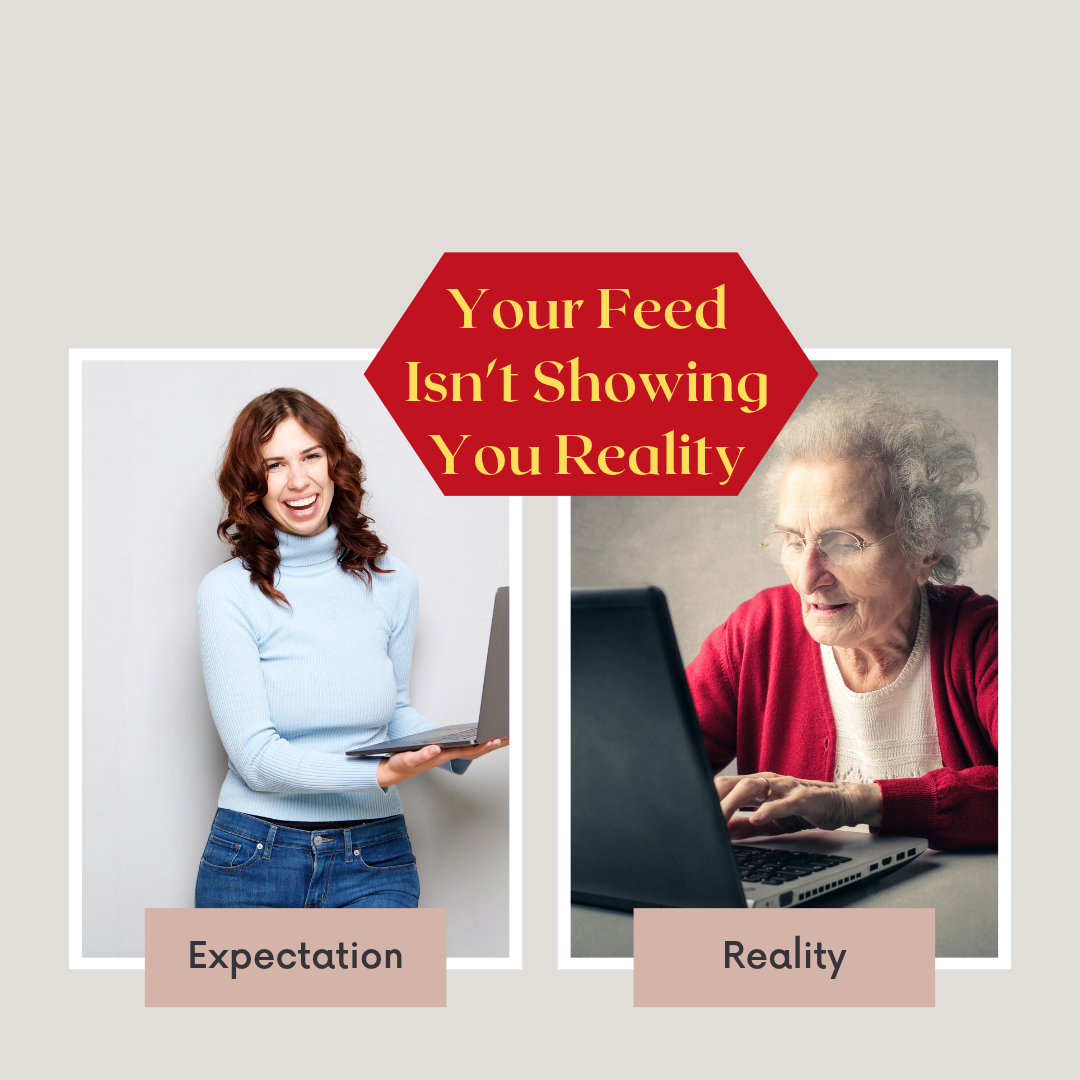
Social Media: The Great Illusion
Open your feed. Everyone is on holiday, getting married, getting promoted and drinking the best coffee of their lives.
Close the app and look around your kitchen. Why does it feel as if everyone else has a better life?
GWI data suggests that adults now spend roughly 16% of their waking hours scrolling social media and video feeds. Yet GWI's analysis, reported by the Financial Times in 2025, found that global time on social platforms peaked in 2022 and has been slowly falling.
10-SECOND VERSION: Your feed is a small, selected slice of life, made by a few very active posters and arranged by an algorithm built to hold your attention.
On Twitter, the most active 10% of US adult users wrote 80% of all tweets. The typical user posted about twice a month.
What People Say....
My feed shows me what is happening in the world and what other people's lives are really like.
Research
In 2019, Pew Research Center studied a sample of US adult Twitter users. It found that the most active 10% of users created 80% of all tweets, while the median user tweeted only about twice a month. A later Pew analysis of data from 2021 found that the top 25% of tweeters produced 97% of tweets.
This is older data from one platform, so it is an example, not a rule for every app. But the pattern, a small group creates most of what you see, is common online.
And what you see is chosen for you. Feeds are sorted by algorithms that are designed to keep you watching, which often means content that gets strong reactions.
Quiet people don't make noise. So the loudest few can look like “everyone.”
The Usual Blah, Blah, Blah
We know that photos can be edited. But there is a bigger problem: editing by selection. People post their happiest moments, the algorithm picks the most exciting ones, and your brain treats the result like an average life.
This is my interpretation, not a study result.
Experience
A woman scrolls for twenty minutes and decides that all her friends are more successful than she is. She forgets that her feed only shows the days they chose to post.
My Question
What is not in my feed and who is not posting?
On the Other Hand
Feeds also show real things: real news, real friends, real moments. Many people use social media to learn and to stay in touch.
The Pew data is from 2018 to 2021 and from one platform, so patterns may be different on other apps today. The point is not that your feed is a lie. The point is that it is a selection.
The Stark Reality - Truth
Your feed contains real content, but it is not a fair picture of reality. It is made by a small group of active posters and sorted by an algorithm.
The Significance
What does it promise? A window on how everyone else lives.
What does the evidence show? That a small share of users creates most of the content, and that algorithms choose what you see.
What should you do? Remember that it is a highlight reel, and balance it with real conversations.
Be Brave.
This week, ask three friends how their month really was — and compare their answer with what they posted.
Frequently Asked Questions
Who creates most of the content on social media?
On Twitter in 2018, the most active 10% of US adult users created 80% of tweets, according to Pew Research Center. Similar “few create most” patterns are common online, but the numbers vary by platform and time.
Does the algorithm show me what is true?
No. Algorithms are designed to show content that holds your attention. That can include true and useful posts, but it does not guarantee accuracy or balance.
Does social media make people compare themselves with others?
Researchers have linked social comparison on social media to lower self-esteem, though the effects differ between people and ways of using it. Limiting passive scrolling can help.
How can I make my feed more realistic?
Follow more people you really know, mute accounts that make you feel worse, and spend more time talking with people than scrolling.
English Lesson: Talking About Feeds and Algorithms
Every article on this blog is also an English lesson. Read slowly, say the new words out loud, and use them today.
New Words
feed (noun) means the stream of posts that you see on social media. My feed is full of holiday photos.
algorithm (noun) means a set of computer rules that makes decisions. The algorithm shows me videos about cooking.
curated (adjective) means carefully chosen and organized. Her page is a curated version of her life.
engagement (noun) means likes, comments, shares and time spent with content. Posts with strong emotions get more engagement.
filter (noun / verb) means to remove or select some things. I filter out accounts that make me feel bad.
content (noun) means the videos, photos and texts that people post. She makes travel content.
Say This, Not That
Say “That's a highlight, not the whole story.”
Don't say “Everyone else has a perfect life.”
Why? The first sentence reminds you that posts are selected.
Say “I'm going to mute accounts that make me feel bad.”
Don't say “I'm just not good enough.”
Why? You can change your feed. You don't need to blame yourself.
Say “That's what they chose to post.”
Don't say “Look how happy they are all the time!”
Why? A post shows a moment, not a whole life.
Grammar Spotlight: the passive voice (present simple)
Use am / is / are + past participle when the action is more important than the person who does it. Add by if you want to say who does it.
Your feed is sorted by an algorithm.
Most tweets are written by a small group.
You are shown what keeps you watching.
Common mistake:
Incorrect: Your feed sorts by an algorithm.
Correct: Your feed is sorted by an algorithm.
Quick Practice
Your feed ___ by an algorithm. (sorts / is sorted)
Most tweets ___ by a small group. (are written / write)
Change to the passive: Algorithms choose the posts.
Answers: 1. is sorted · 2. are written · 3. The posts are chosen by algorithms.
Enjoyed this lesson? Subscribe to English with Sue and become an active student. Every article gives you new words, useful phrases and one grammar point. Today's challenge: write one sentence with a new word and say it out loud.


