Women Were Sold a Lot of Myths
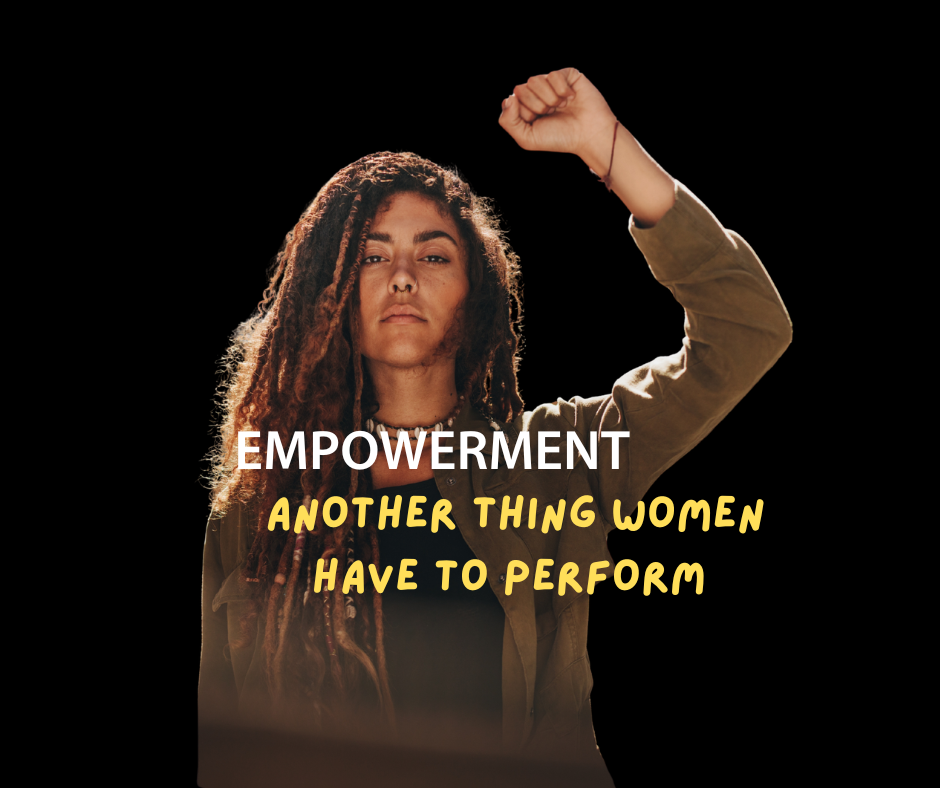
Empowerment Has Become Another Thing Women Have to Perform
Women Were Sold a Lot of Myths - Part 7 (Season Finale)
A skincare ad tells her to love her wrinkles. A shampoo ad tells her to be unapologetically herself. A protein bar tells her she's a boss.
Somewhere along the way, feeling good about yourself turned into one more thing being sold back to you.
The so very obvious dangling carrot. "Empowerment" has become such a dominant marketing category that entire ad campaigns are built and tested around the word itself, turning a political idea into a purchasable feeling, measured the same way as any other sales metric.
Words for every level, B1 to C2
advertisement / ad (noun, B1) is a message that tries to sell you something. I saw an ad for shampoo this morning.
confident (adjective, B1) is to feel sure of yourself. She felt confident in the interview.
marketing (noun, B2) is the business of promoting and selling products. Marketing decides how a brand talks to you.
genuine (adjective, B2) means real, true, not fake. Was her confidence genuine, or just for the camera?
expectation (noun, B2) is something you believe should happen. There's a new expectation to look happy online.
obligation (noun, C1) is something you feel you must do. Confidence became an obligation, not a choice.
commodify (verb, C2) means to turn something, like a feeling or idea, into a product to sell. Empowerment has been commodified by brands.
What is being sold.
Empowerment is the antidote to everything else on this list, the confident, self-assured alternative to niceness, beauty pressure, and emotional judgment. Just embrace your power.
The Investigation
Marketers noticed the same thing researchers had already been flagging under the term "femvertising": campaigns built around female confidence and self-acceptance reliably out-performed older ads that simply sold products through traditional beauty standards. It worked, commercially, because the message genuinely resonated, plenty of women found real value in seeing confidence and self-acceptance represented back to them.
But once it worked, it scaled the way anything profitable scales. "Empowerment" stopped being a message some brands occasionally reached for and became a default category, expected, near-universal, and increasingly generic across entire industries, from skincare to sportswear to financial services.
A message that once felt like relief from constant self-improvement pressure became, itself, one more standard to visibly perform: not just be confident, but be seen being confident, on camera, in a caption, correctly.
The Contradiction
Empowerment messaging was supposed to be the exit from an exhausting set of expectations. Instead, it quietly became one more expectation stacked on top of the others: look effortlessly good, be endlessly nice, stay emotionally composed, and radiate visible, marketable confidence about all of it, all the time.
The Human Question
Someone has a genuinely hard, low-confidence day, normal, human, ordinary, while her feed is full of language telling her she should be feeling unstoppable. The gap between how she actually feels and how she's supposed to be performing feeling becomes its own quiet source of pressure.
Reality being questioned.
If "empowerment" can be bought, worn, and posted, has it become a genuine shift in how women are seen, or just a new, more flattering costume for the same old expectation to always be a little more than human?
The Other Side
This isn't a claim that empowerment messaging is worthless or cynical top to bottom. Representation genuinely matters, seeing confidence, ambition, and self-acceptance modeled has real value, especially for people who grew up seeing very little of it. The correction is narrower: the difference between empowerment as a genuine internal shift and empowerment as a performed aesthetic is real, and worth noticing, even when the marketing version borrows real language from the genuine one.
The Verdict
Partly true, worth separating.
Real empowerment, feeling genuinely capable and self-directed, exists and matters. The marketed, performed version of it has become widespread enough to function as its own quiet obligation, and the two are easy to mistake for each other.
The Reality Check
What does it promise? A confident, self-assured feeling, available through the right message, product, or mindset.
What does the evidence show? That "empowerment" has become a dominant, near-universal marketing category, commercially tested and scaled like anything else being sold.
What should you do with the gap? Notice the difference between feeling capable and performing capability for an audience, they're not the same thing, even when they borrow the same words.
Quick Check
Tap to test yourself before you keep scrolling.
Reveal the answer
Question: Why did "empowerment" spread across so many industries, according to the post?
Answer: Because it worked commercially, campaigns built around confidence and self-acceptance out-performed older ads, so brands scaled the message the way anything profitable gets scaled.
Check Yourself. Consider this Closing Question for the Whole Series
Across this series, we've tested what women were told about having it all, being nice, caregiving, the clock, beauty, emotion, and now empowerment itself.
Here's the last one: if you stripped away every audience, no caption, no camera, nobody watching, what would actually feeling capable look like, versus what you've learned to perform?
This is the part where You test yourself.
Write two or three sentences in the comments. Use at least two words from the English spotlight. Start with: "I feel genuinely confident when ..."
See a model answer
I feel genuinely confident when I'm not performing for anyone. Marketing has an obligation to sell products, not to decide what confidence should look like.
Thanks for reading the whole series! Want more English practice like this? Join Sue for lessons that take you from reading to speaking with confidence.


