AI: The New Uncomfortable Truth
When Everyone Uses AI, Originality Becomes Rebellion
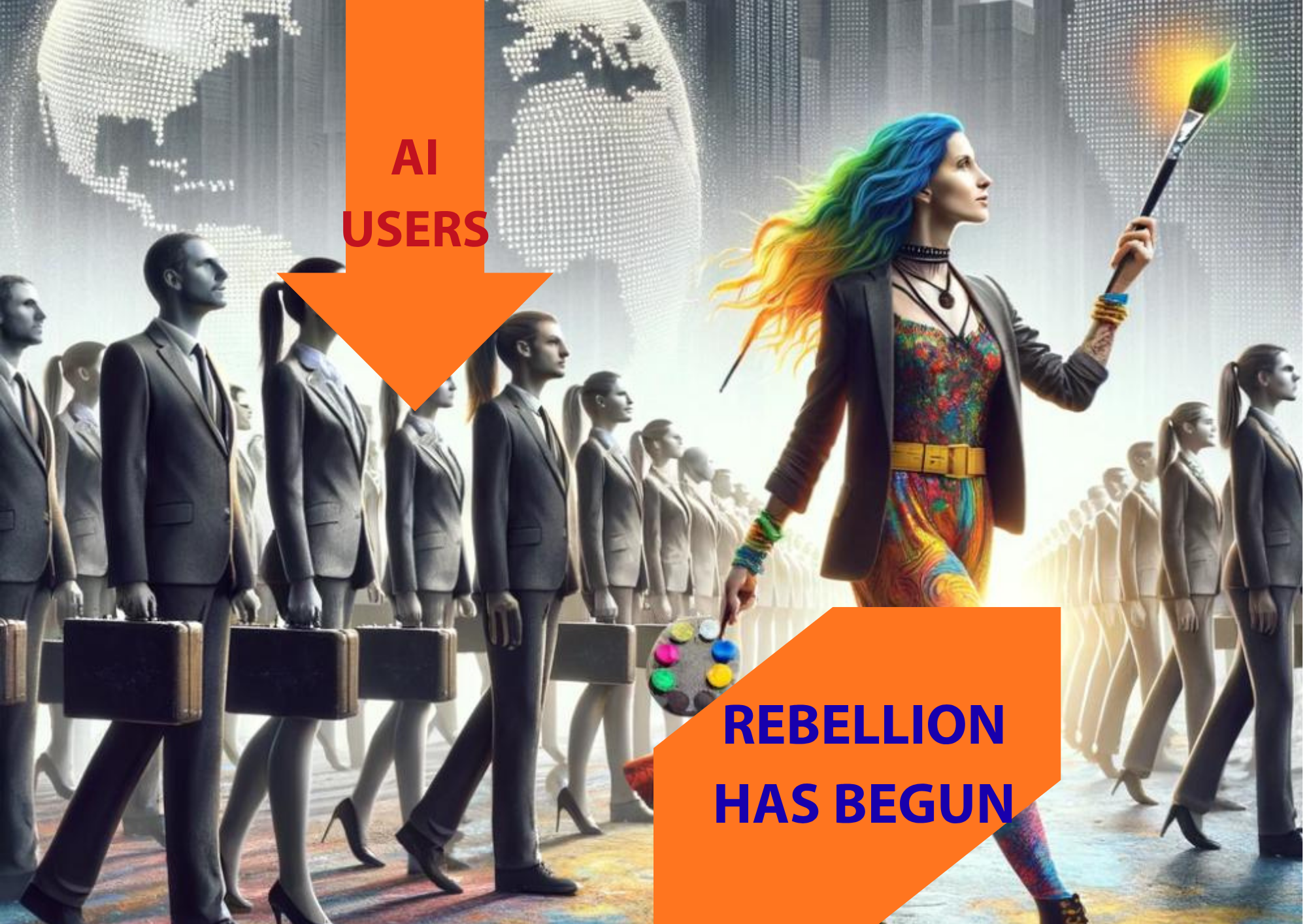
The Death of Authenticity — Part 7 (Season Finale)
Merriam-Webster's word of the year for 2025 was "AI slop."
A year later, something stranger happened. The urgent question stopped being how do we label content made by AI and became how do we prove something wasn't.
Certification bodies, unions, and studios started racing to stamp things "Human Authored," "Proudly Human," "Guaranteed Human", like a nutrition label for a person.
In under two years, being human went from the default assumption to a premium feature you now have to prove you have.
The Claim
The fear going around is that once AI content saturates everything, human effort simply disappears into the noise, undetectable, unrewarded, not worth paying for. Why would anyone notice, or pay extra for, a human hand in a market flooded with machine output?
The Investigation
Here's what's actually happening instead. The Authors Guild launched a "Human Authored" certification in early 2025. A UK startup called Books By People followed with an "Organic Literature" stamp for AI-free books. The 2024 film Heretic closed with an on-screen note that no generative AI was used in making it. Pluribus, the 2025 show from Breaking Bad's creator, ends its credits with the plain statement: "This show was made by humans." iHeartMedia launched a "Guaranteed Human" campaign promising real people, not AI hosts, at the controls. Spotify added a "Verified" badge in 2026 specifically to separate human artists from AI-generated ones.
At least eight separate organizations across the UK, US, and Australia are now racing to build a globally recognized "human-made" certification, the creative industry's version of a Fair Trade stamp.
One certification CEO put it plainly: AI content flooding the market has created a real economic premium on work that's provably human, and companies are moving fast to capture it.
The Contradiction
Sit with the shape of this for a second, because it inverts the fear entirely.
The more universal AI becomes, the more valuable proof of human effort gets, not less. Saturation didn't erase the value of "a person actually made this." It created a market for proving it, almost overnight, with real trademark disputes already breaking out over who owns the phrase "AI-free."
But the same saturation that created this premium also makes it fakeable. In 2025, a band called Velvet Sundown went viral, built a real, emotionally invested fanbase, and racked up real streams, before it came out that the entire band was AI-generated. The premium on "human-made" is real. So is the incentive to fake having it.
We didn't just create a new thing to value. We immediately created a new thing to lie about.
The Human Question
If you've ever made something, written, filmed, built, and felt like it was disappearing into an ocean of AI-generated noise nobody would ever notice, this is worth hearing: the market is currently, actively, structurally betting against that feeling. Companies are spending real money certifying, labeling, and marketing exactly the kind of small, unglamorous, unmistakably human effort that felt pointless to keep doing.
It doesn't feel like rebellion while you're doing it. It just feels like doing the work. The data suggests that's exactly what's becoming valuable.
The Uncomfortable Question
If proving you're human is now a paid certification process, with competing standards, logos, and trademark fights over who gets to sell the stamp, has "being human" simply become another product feature, marketed and monetized like everything else it was supposed to be the alternative to?
The Other Side
This deserves real skepticism, not just optimism. At least eight competing certification schemes, with wildly different standards, some requiring real vetting by professional analysts, others just a downloadable logo with no verification at all, is not a healthy market. It's a fragmented one. Consumer researchers point out that Fair Trade took decades to consolidate into something people actually trust, and it had the relative advantage of certifying physical supply chains. Verifying whether a creative process stayed human is a much murkier, harder thing to prove, and right now, nobody agrees on how.
So "originality becomes rebellion" might be overstating a chaotic, early, unproven market reaction, not describing a stable cultural shift that's already arrived.
The Verdict
Partly true, still unfolding.
It's true, and genuinely new, that AI saturation created immediate, measurable commercial demand for certified human work, that's not speculation, it's already showing up in real certifications, real premium pricing conversations, real legal fights. It's too early to call this a finished "rebellion." The certification landscape is fragmented, inconsistently verified, and already being gamed. The premium on being human is real. Whether you can currently trust any specific badge claiming to prove it is a separate, much shakier question.
The Authenticity Test
Is it real? Did a human genuinely make this, or was the "making" mostly prompting?
Is it human? And can the badge claiming so actually be trusted, or is it just a logo for sale?
Does it matter? Given real uncertainty in how any of this gets verified right now, should a badge change your behavior at all, or is your own judgment still the better test?
Your Turn and a Closing Question for the Whole Series
Across this series we've asked whether a voice was real, whether a face was human, whether an influencer existed, whether creativity was actually dying, whether an ad was honest, and now whether "human-made" is even provable.
Here's the last one, and it's the only one that was ever really about you: now that being human is apparently a premium feature you can buy a stamp for, what are you making that a stamp could never fake?
Sources & Further Reading
Organizations Scramble to Create Universal 'AI-Free' Certification Label - Breitbart
Eight groups race to create global AI-free certification - ResultSense
When 'Made by Humans' Becomes a Selling Point - Ashurst Perkins Coie
Made by Humans: How Brands Are Beating AI Slop with Authentic Content in 2026 - Nurdd