The Self-Improvement Trap
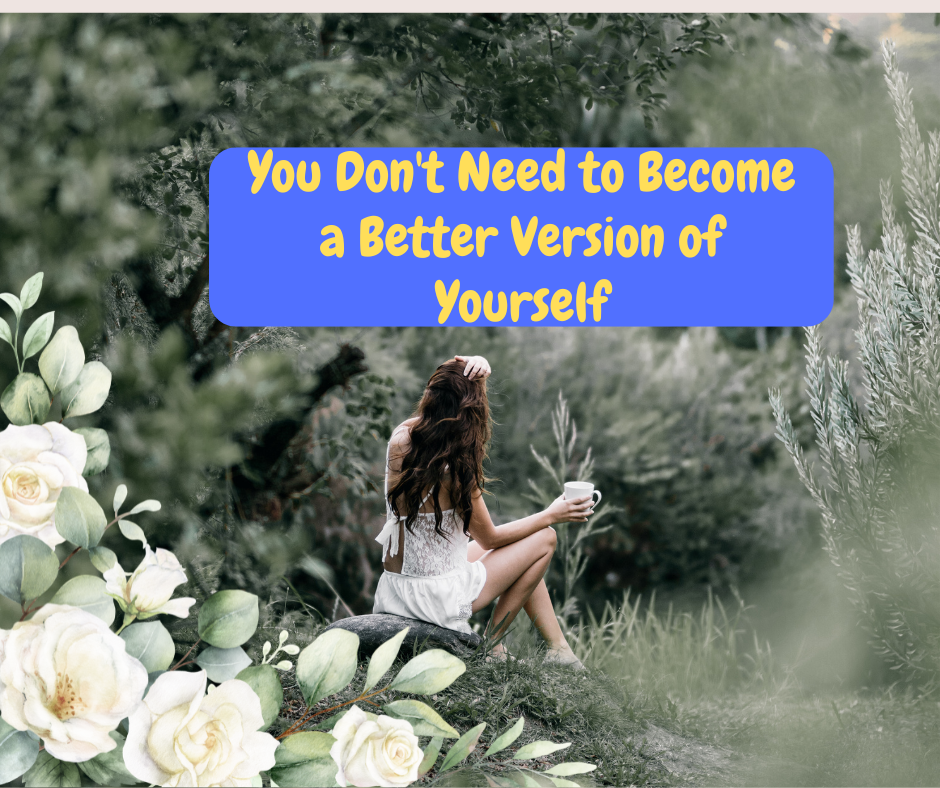
You Don't Need to Become a Better Version of Yourself
The Self-Improvement Trap
It is January. Maya writes a list: wake up earlier, read more, eat better, be calmer, be more confident. By February, she feels tired. She also feels she is not good enough.
Somewhere along the way, “improving yourself” turned into a job with no end.
In one experiment, students who were told to be kind to themselves after failing a test, spent more time studying for the next test than students in the other groups.
What People Say....
You must always become a better version of yourself. If you stop improving, you are falling behind.
Research
Psychologists Juliana Breines and Serena Chen, asked a simple question: does being hard on yourself make you try harder?
In one experiment, students took a difficult test and then had a chance to study for a second one. Some students were told to treat their failure with self-compassion and to remember that everyone fails, and to be kind to themselves. Those students studied longer than students in the other groups.
The results suggest that kindness toward yourself does not make you lazy. It can help you keep going.
Being kind to yourself is not giving up. For many people, it is how they keep going.
The Judgement.
The self-improvement industry tells us a story: you are a project, and the project is never finished. Every year there is a new habit, a new app, a new plan. Under all of it, the message is the same: “You are not enough yet.”
Notice that there is always something new to fix. Maybe that is not an accident.
Experience
Think of a person who finishes one goal and writes the next one immediately. There is no moment of “This is enough.” They are always on the way to becoming someone better, and they never arrive.
My Question
If you can only like yourself after you improve, when will you start?
On the Other Hand
Growing is good. Learning new skills, building healthy habits and fixing real problems all make life better. This is not an argument for doing nothing.
The real question is why you are improving. Are you curious and want to grow? Or do you believe you are not good enough right now?
The Stark Reality - Truth?
You can grow, and growth can feel great. But you do not need to become a better version of yourself to deserve respect, rest or love. You are allowed to be a person, not a project.
The Significance
What does it promise? That constant improvement leads to a happier life.
What does the evidence show? That being kind to yourself can help your motivation, so you do not have to attack yourself to grow.
What should you do? Choose one thing you truly want to improve. Leave the rest alone for now.
Be Brave.
What would you do this week if you did not need to improve anything?
English Lesson: Talking About Yourself Kindly
Every article on this blog is also an English lesson. Read slowly, say the new words out loud, and use them today.
New Words
improve (verb) means to become better, or to make something better. I want to improve my English.
self-compassion (noun) means being kind to yourself when you fail. Self-compassion helps you try again.
motivation (noun) means the reason or energy you have to do something. I lost my motivation after the first week.
perfectionism (noun) means the need to do everything without mistakes. Her perfectionism makes her tired.
enough (adjective / adverb) means as much as you need. You are good enough.
burn out (phrasal verb) means to become extremely tired from doing too much. He burned out after a year of 70-hour weeks.
Say This, Not That
Say “I made a mistake. I'll do better next time.”
Don't say “I'm so stupid. I always fail.”
Why? The first sentence talks about one action. The second attacks you as a person.
Say “I'd like to improve my speaking.”
Don't say “I must fix everything about myself.”
Why? One clear goal is realistic. “Everything” is impossible.
Say “I'm learning, and that takes time.”
Don't say “I'm not good enough yet.”
Why? The word “yet” says you are always behind.
Grammar Spotlight: need to / don't need to / mustn't
need to = it is necessary. You need to sleep.
don't need to = it is not necessary. You don't need to be perfect.
mustn't = it is forbidden. You mustn't drive through a red light.
Common mistake: Many learners say “mustn't” when they mean “not necessary.”
Correct: You mustn't be perfect.
Incorrect: You don't need to be perfect.
Quick Practice
You ___ be perfect. It's not necessary. (don't need to / mustn't)
You ___ drive through a red light. It's forbidden. (don't need to / mustn't)
Fix the mistake: You don't must be perfect.
Answers: 1. don't need to · 2. mustn't · 3. You don't need to be perfect.
Have you enjoyed this lesson? Subscribe to English with Sue and become an active student. Every article gives you new words, useful phrases and one grammar point. Today's challenge: write one sentence with a new word and say it out loud.
More articles

Sometimes Walking Away Is the Healthiest Form of Love

Being Alone Isn't the Same as Being Lonely

Opposites Attract - Sometimes They Just Annoy Each Other