Everyday: The Things We Stopped Noticing
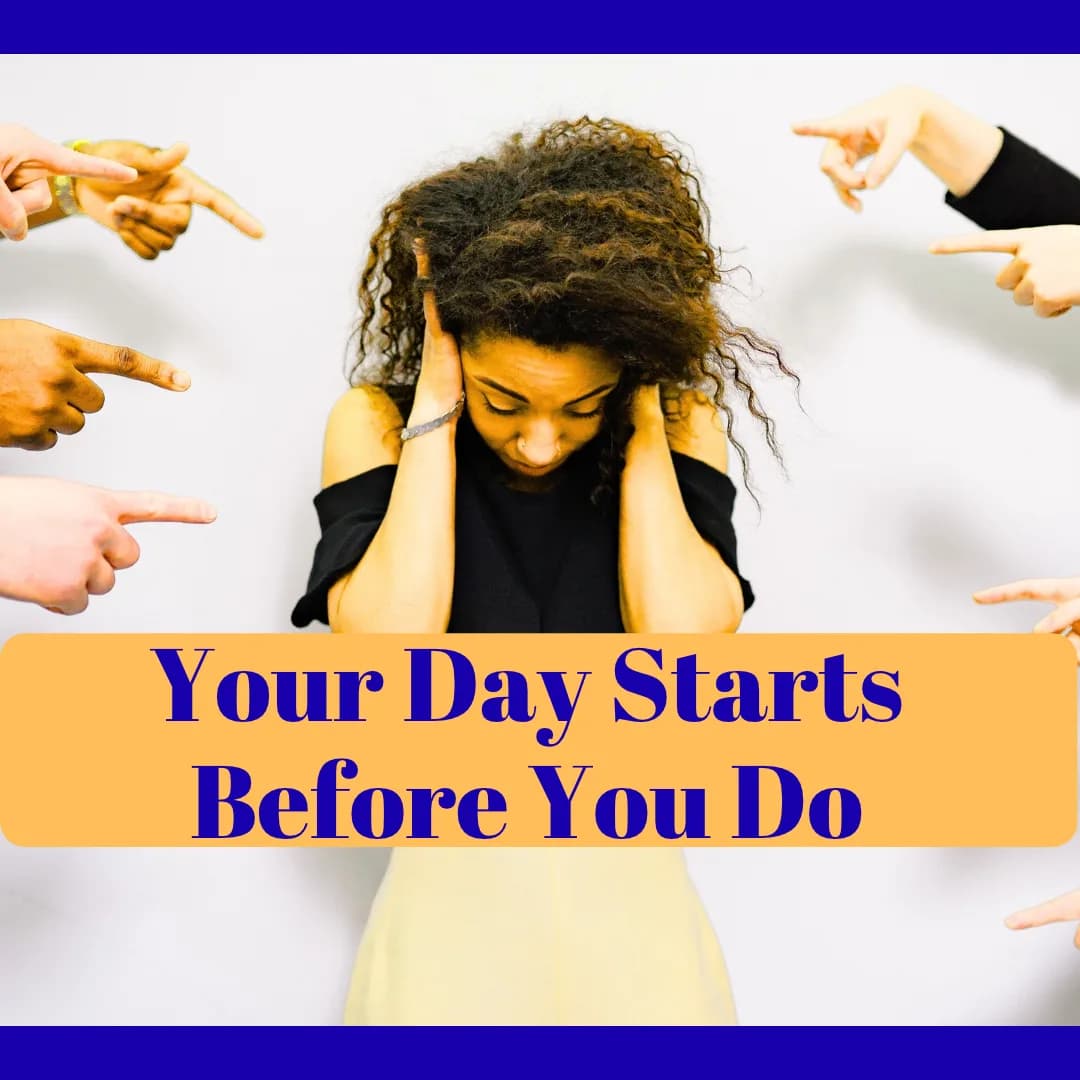
Your eyes open. Your hand is already reaching for the phone on the bedside table. You did not decide to do it. You do not remember deciding.
Did your day start with you, or with a screen?
TRENDING NOW: In a 2026 survey of 1,000 US adults by Reviews.org, 85% said they check their phone within 10 minutes of waking up. Nearly half of Americans say they feel addicted to their phones.
10-SECOND VERSION: In a famous diary study, about a third to two-fifths of what people did each day was a habit. Your morning may be mostly autopilot.
A third to two-fifths of what you do each day may be autopilot. Your first reach is probably one of them.
What People Say....
I wake up and decide how my day goes. My first hour is my choice.
Research
In 2002, psychologist Wendy Wood and her colleagues asked university students at Texas A&M to keep diaries of what they did. Two diary studies gave two results: about 35% and about 43% of the logged actions were habits. A habit, in their definition, was something people did almost every day, usually in the same place.
Wood's team also found that habits are linked to the context: the place, the time and the cue that starts them. Your phone on the bedside table is a strong cue.
A note: the students were a small group, and the diaries relied on self-reports. The number is a clue, not a law.
The first thing you touch in the morning is often the least chosen thing in your day.
The Usual Blah, Blah, Blah
We like to think the morning is a fresh start. But a fresh start that begins with a notification has already been shaped by someone else's app.
That is my opinion, and it may irritate you. Good.
Experience
You promise yourself: five minutes of silence before the phone. Then the screen lights up. Twenty minutes later you are reading news you did not care about, and your coffee has gone cold.
My Question
If I could see my first ten minutes on video, would I be proud of them?
On the Other Hand
Some morning habits are useful. A phone can be an alarm, a weather check or a calendar. The problem is not every use. It is the reach that happens before you have decided anything.
And the survey is self-reported by American adults, so the exact figure may be different for you.
The Stark Reality - Truth
Partly true. Much of daily behavior is habitual, and mornings are a strong habit zone. But you can change the cue, for example by charging your phone outside the bedroom.
The Significance
What does it promise? That you choose how your day begins.
What does the evidence show? That many actions are habits, and most people check their phones very early in the day.
What should you do? Move the phone out of reach for the first ten minutes, and see how it feels.
Be Brave.
Tomorrow, leave your phone in another room for the first ten minutes. What was the first thing you actually wanted to do?
Frequently Asked Questions
Is it normal to check my phone first thing in the morning?
Yes, it is very common. In a 2026 Reviews.org survey, 85% of US adults said they check their phone within 10 minutes of waking up.
What is a habit in psychology?
A habit is a behavior that happens often, in a stable context, and often without much conscious thought. Wendy Wood's research defines it this way.
Are all habits bad?
No. Brushing your teeth is a habit, and it is helpful. The question is whether a habit serves you or runs you.
How can I change a morning habit?
Change the cue, not just the willpower. Move the object, change the place, or set a new first action, such as water or a short walk.
English Lesson: Talking About Habits
Every article on this blog is also an English lesson. Read slowly, say the new words out loud, and use them today.
New Words
habit (noun) means something you do often, almost without thinking. Checking the news is my habit.
autopilot (noun) means doing things without paying full attention. I drove home on autopilot.
cue (noun) means a signal that starts a habit. The phone on the table is my cue.
reach for (phrasal verb) means to move your hand to get something. She reached for her glasses.
irritate (verb) means to annoy someone. The noise irritates me.
shaped (verb, past participle of shape) means formed or influenced. My routine is shaped by work.
💬 Say This, Not That
- ✅ “I'm in the habit of checking my phone first thing.”
❌ “I always check it. I can't help it.”
Why? “Be in the habit of” describes it calmly and clearly. - ✅ “I want to break this habit.”
❌ “I'm addicted and hopeless.”
Why? Clear goals are more useful than labels. - ✅ “I noticed I reach for my phone every morning.”
❌ “I'm so weak.”
Why? Noticing is the first step.
✏️ Grammar Spotlight: be in the habit of + -ing
Use be in the habit of + -ing to describe a regular action.
- I am in the habit of checking my phone at seven.
- She is in the habit of walking before breakfast.
⚠️ Common mistake: Use -ing after of, not the base verb.
❌ I am in the habit of check my phone.
✅ I am in the habit of checking my phone.
🎯 Quick Practice
- He is ___ the news every morning. (in the habit of reading / in the habit of read)
- She is ___ her phone before breakfast. (in the habit of checking / in the habit of check)
- Fix the mistake: I am in the habit of wake up at six.
Answers: 1. in the habit of reading · 2. in the habit of checking · 3. I am in the habit of waking up at six.
💌 Enjoyed this lesson? Subscribe to English with Sue and become an active student. Every article gives you new words, useful phrases and one grammar point. Today's challenge: write one sentence with a new word and say it out loud.
⭐ SPOTLIGHT
The one thing to remember: the first ten minutes of your day often run on autopilot, so the cue matters more than the willpower.
The number to know: in Wendy Wood's diary studies, about 35% to 43% of logged daily actions were habits.
Your question: What is the first thing you reach for tomorrow morning?