The Self-Improvement Trap
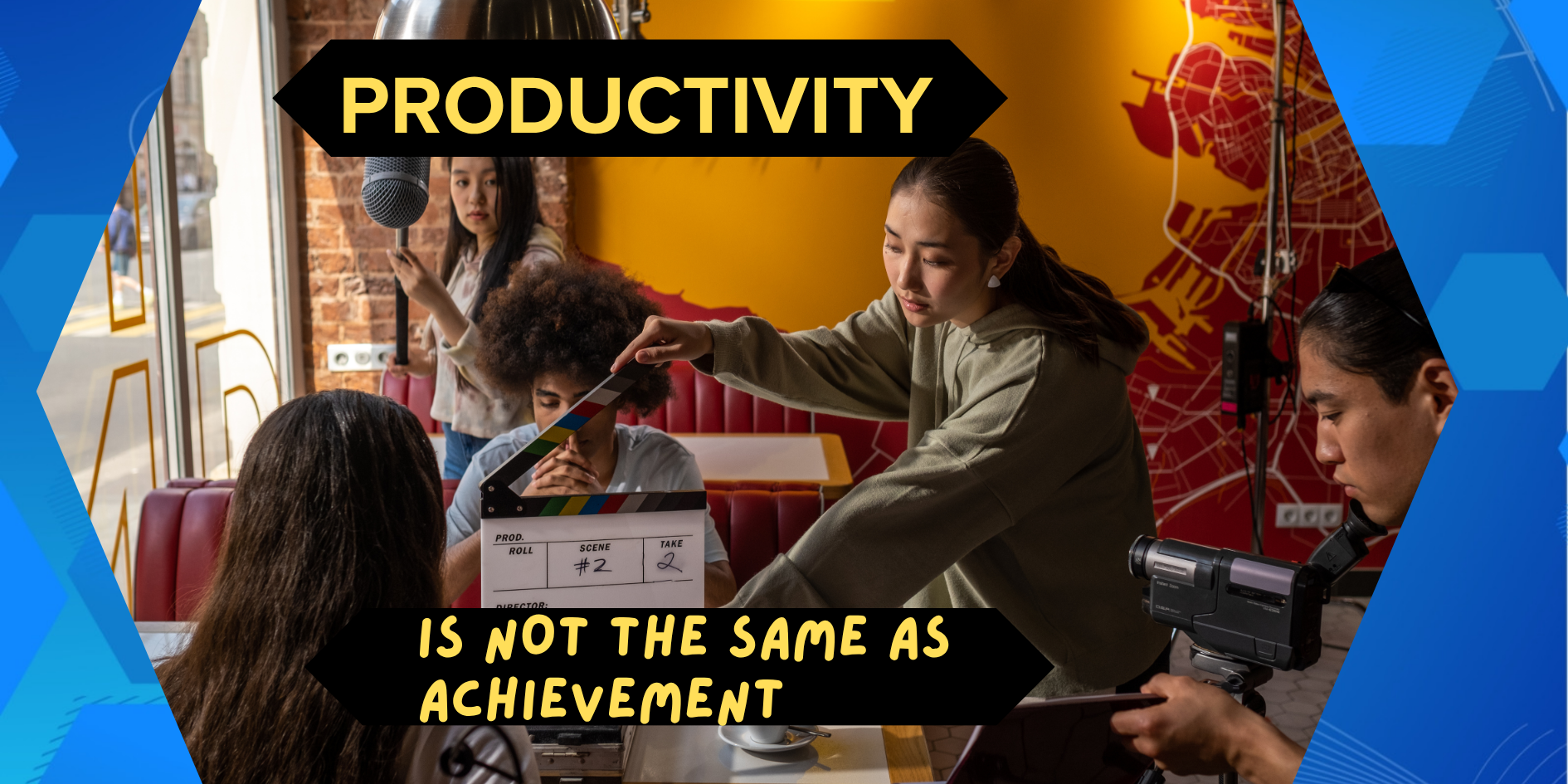
Productivity Is Not the Same as Achievement
The Self-Improvement Trap
“How are you?” “Busy!” We say it with a tired smile, and a little pride. Being busy has become a kind of badge.
Researchers found that in the United States, people who work long hours and have little free time are seen as having higher status. In Italy, the pattern was the opposite: people with more free time were seen as higher in status.
What People Say....
If you are busy and your to-do list is full, you are productive. And productive people are successful.
Research
Silvia Bellezza, Neeru Paharia and Anat Keinan published a study called “Conspicuous Consumption of Time.” They found that in the United States, people judge busy people, people who work long hours and have little free time, as having higher status. Their explanation: being busy suggests that you are in demand.
But in Italy, the pattern was the opposite. People with a lot of free time were seen as higher in status. So “busy equals important” is not a law of nature. It is a cultural belief.
Being busy tells people how much you do. It does not tell them what you have achieved.
The Usual Blah, Blah, Blah
Productivity apps count tasks. They do not count meaning. You can finish thirty small tasks and still not move one important goal forward.
A full calendar can feel like progress while it hides the one thing that really matters. This is my opinion, but see if it matches your week.
Experience
Look at a typical Friday evening. Ana has answered 80 emails, joined six meetings and ticked off 25 tasks. But the report her boss really needs is still not written. She feels exhausted — and strangely empty.
A Question You Must Ask.
Am I doing things that matter, or things that make me look busy?
On the Other Hand
Productivity tools can help. Planning your day, tracking tasks and focusing on priorities are real skills. And some days are simply full of small tasks that must be done.
Being busy is not always empty. The problem begins when the number of tasks becomes the measure of your value.
The Stark Reality - Truth
Productivity and achievement are not the same. Productivity is about how much you do. Achievement is about whether what you do matters to you.
The Significance
What does it promise? That a full to-do list means a successful life.
What does the evidence show? That “busy equals high status” is a cultural idea. In Italy, people saw it the other way around.
What should you do? Choose one important thing each day and protect time for it.
Be Brave.
If you could finish only one thing this week, what would it be?
English Lesson: Talking About Busy Lives
Every article on this blog is also an English lesson. Read slowly, say the new words out loud, and use them today.
New Words
productive (adjective) means doing or making a lot. I was very productive this morning.
achievement (noun) means something important that you have done successfully. Finishing her degree was a great achievement.
priority (noun) means something that is more important than other things. My family is my first priority.
status (noun) means your position or importance in society. Some people use expensive things to show their status.
meaningful (adjective) means important and full of purpose. She wants a meaningful job.
to-do list (noun) means a list of things you need to do. My to-do list is never finished.
Say This, Not That
Say “That's not a priority for me right now.”
Don't say “I don't have time.”
Why? “I don't have time” often means “not a priority.” Say what is true.
Say “Can I get back to you on Thursday?”
Don't say “I'm too busy to talk to you.”
Why? The first sentence is polite and gives a plan.
Say “This week I'm focusing on one important project.”
Don't say “I'm so busy!” (as your only answer)
Why? Tell people what you are doing, not just how busy you are.
Grammar Spotlight: less / fewer
fewer + countable nouns (things you can count): fewer tasks, fewer meetings, fewer emails
less + uncountable nouns (things you cannot count): less time, less stress, less money
Fewer tasks, less stress.
Common mistake:
Wrong: There are less people in the meeting.
Right: There are fewer people in the meeting.
Quick Practice
I want ___ tasks and ___ stress. (fewer / less)
We have ___ time today. (less / fewer)
Fix the mistake: There are less people in the meeting.
Answers: 1. fewer, less · 2. less · 3. There are fewer people in the meeting.
Enjoyed this lesson? Subscribe to English with Sue and become an active student. Every article gives you new words, useful phrases and one grammar point. Today's challenge: write one sentence with a new word and say it out loud.