The Self-Improvement Trap
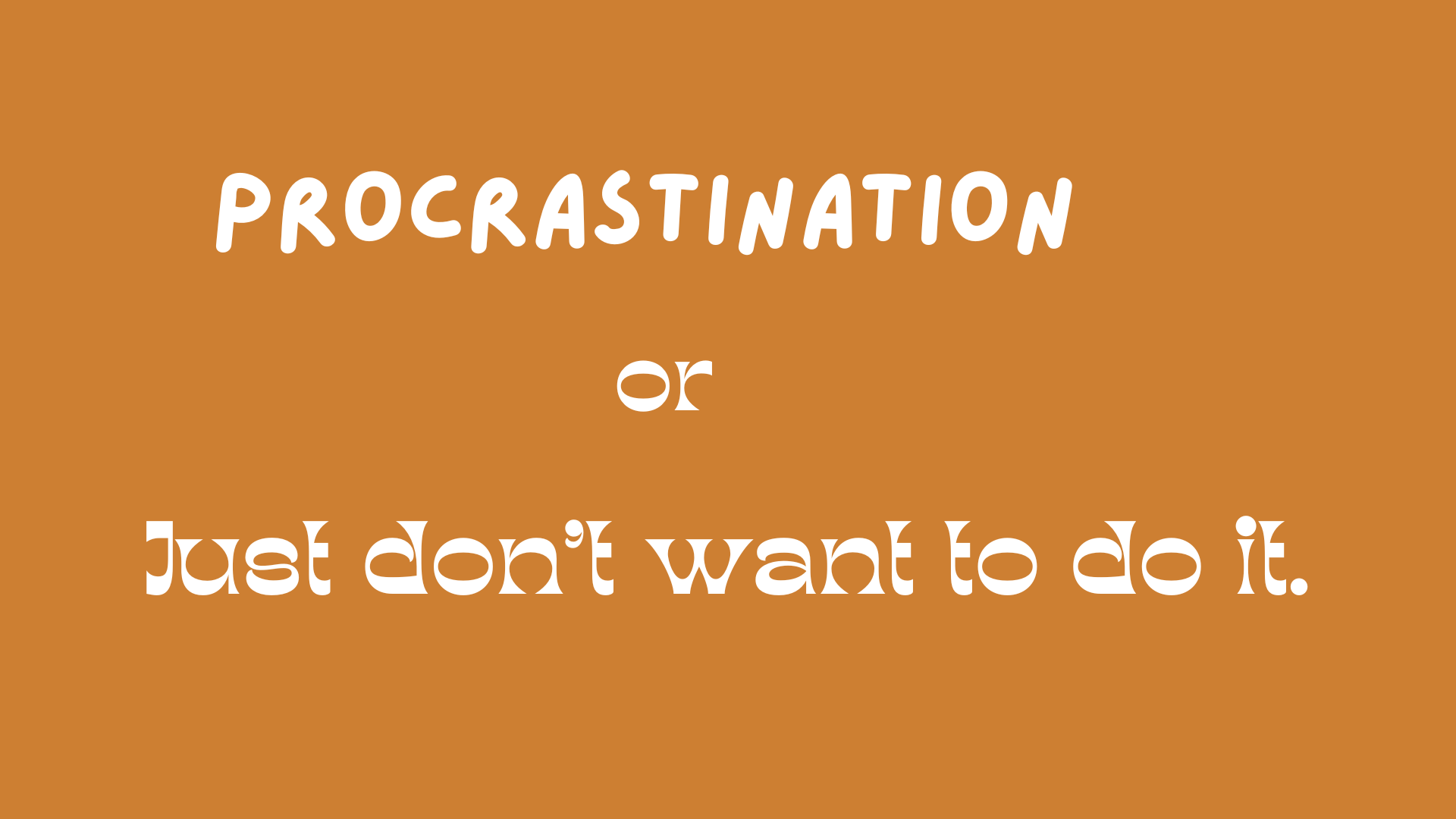
Sometimes You're Not Procrastinating - You Simply Don't Want to Do It
The Self-Improvement Trap
The email has been in your inbox for nine days. You open it, close it, and clean the kitchen instead. You call yourself lazy.
Lazy? What about - too much on my plate!
Researchers who study procrastination say it is not mainly a time-management problem. It is more about managing feelings: we avoid a task that makes us feel bad, and for a short time we feel better.
What People Say....
Procrastination means you are lazy or bad at managing time. Buy a better planner and the problem will disappear.
Research
Psychologists Fuschia Sirois and Timothy Pychyl describe procrastination as short-term mood repair. When a task makes us feel anxious, bored or unsure, we move to something more pleasant. Our mood improves for a moment, and that is why we do it again.
They argue that procrastination is a problem of emotion, not a problem of time management. Other research has also found that unpleasant tasks, and low confidence in being able to do them, are linked to more delay.
You are not avoiding the task. You are avoiding the feeling the task gives you.
Something to really think about.
We call it laziness because the word is simple. But people who procrastinate often feel worried and guilty, not relaxed. That is a clue that something else is going on.
Another planner will not fix a feeling.
Experience
Think of the report you keep avoiding. Maybe you are afraid it will not be good. Maybe it is boring. Or maybe, and this is the honest option, you do not want to do it at all, and you have been pretending that you do.
My Question
Is this a task I am afraid of, or a task I do not actually want?
On the Other Hand
Not every delay is a deep message. Sometimes we are just tired, or the task is dull but necessary, and we need a plan. Some people also struggle with attention or planning, and that deserves real support.
Practical tools, a tiny first step, a ten-minute timer, are well worth trying. And be careful: “I don't want to do it” is not a good reason to skip something important, like a medical appointment or a tax form.
The Stark Reality - Truth
Partly true. Procrastination is often about feelings, not time. There are times when the feeling is fear and times when it is a quiet signal that you no longer want what you are working toward. It is worth asking which one it is for self preservation.
The Significance
What does it promise? That better time management will end procrastination.
What does the evidence show? That procrastination is closely linked to avoiding unpleasant feelings.
What should you do? Ask yourself: am I afraid, bored, or simply not interested? Then choose a small step, or let the task go.
Be Brave.
In this series we looked at self-improvement, morning routines, hustle, positive thinking, rest and busyness. Here is the last question: what is one thing on your to-do list that you could stop pretending to want?
English Lesson: Delaying, Avoiding and Deciding
Every article on this blog is also an English lesson. Read slowly, say the new words out loud, and use them today.
New Words
procrastinate (verb) means to delay doing something that you should do. I procrastinate when I have to write emails.
avoid (verb) means to stay away from something. She avoids difficult conversations.
put off (phrasal verb) means to delay something until later. He put off calling the doctor.
anxious (adjective) means worried and nervous. I feel anxious before exams.
reluctant (adjective) means not wanting to do something. She was reluctant to start the project.
deadline (noun) means the last time or date you can finish something. The deadline is Friday.
Say This, Not That
Say “I've been putting this off. I'll do ten minutes now.”
Don't say “I'm so lazy. I'll never finish.”
Why? The first sentence names the problem and starts small.
Say “Honestly, I don't want to do this. Can we talk about other options?”
Don't say “Yes, of course!” (when you mean no)
Why? Being honest early saves everyone time.
Say “I'm reluctant to start because I'm afraid of making mistakes.”
Don't say “I just can't be bothered.”
Why? The first sentence tells you the real reason.
Grammar Spotlight: verb + gerund or infinitive
Some verbs are followed by the -ing form (gerund). Others are followed by to + verb (infinitive).
Gerund: avoid, put off, delay, keep, finish, stop. She avoids opening the email.
Infinitive: want, decide, plan, hope, need. I want to finish the report today.
Common mistake:
Incorrect: He put off to call the doctor.
Correct: He put off calling the doctor.
Quick Practice
She avoids ___ the email. (to open / opening)
I want ___ the report today. (to finish / finishing)
Fix the mistake: He put off to call the doctor.
Answers: 1. opening · 2. to finish · 3. He put off calling the doctor.
🎉 You finished the whole Self-Improvement Trap series! Which of the seven lessons helped you most?
Enjoyed this lesson? Subscribe to English with Sue and become an active student. Every article gives you new words, useful phrases and one grammar point. Today's challenge: write one sentence with a new word and say it out loud.