Social Media: The Great Illusion
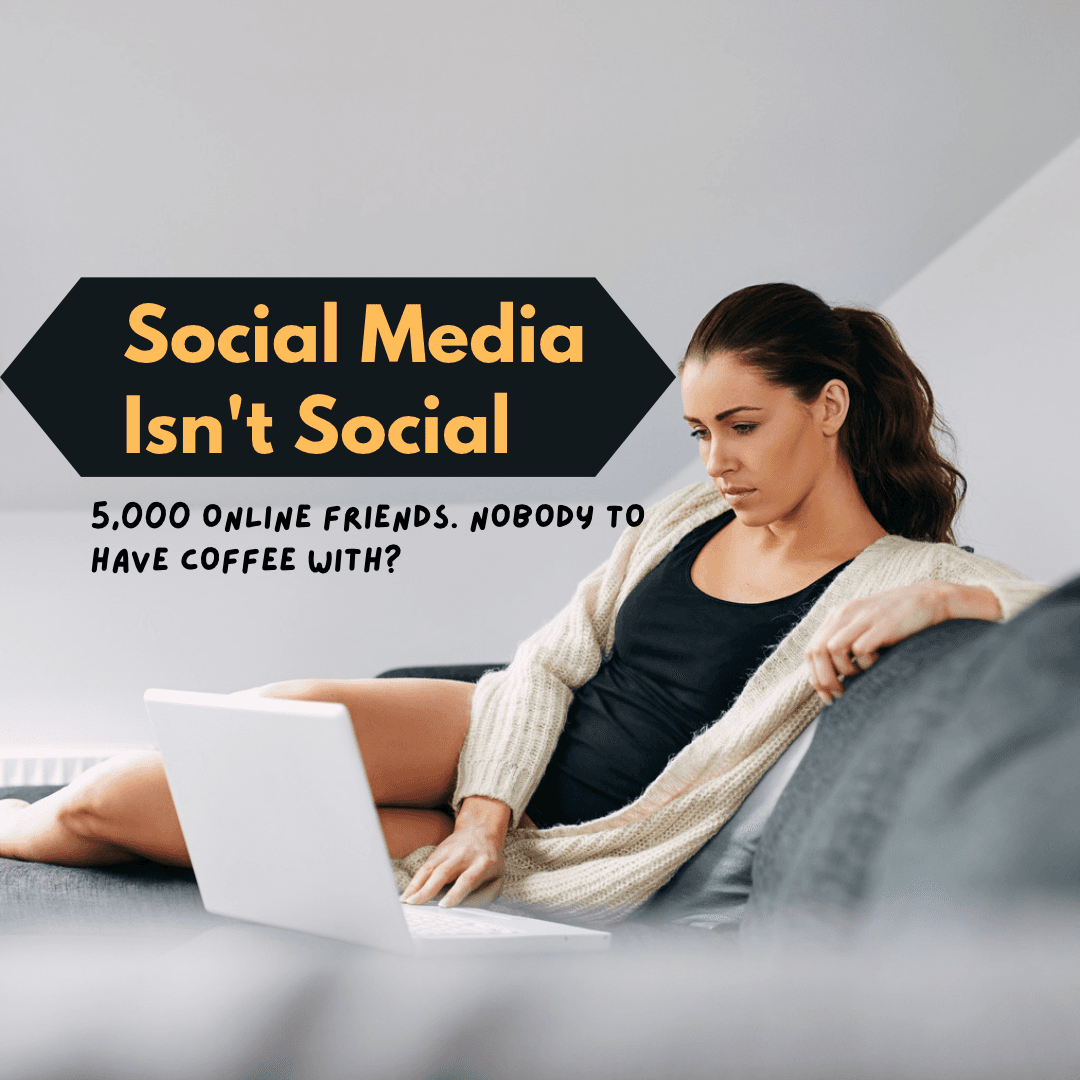
Social Media Isn't Social
Social Media: The Great Illusion
You have 800 friends online. You scroll for an hour. You close the app, and feel strangely alone.
How can something called “social” leave us feeling so lonely?
Australia became the first country to ban social media for under-16s, on 10 December 2025. A government report said the share of under-16s with an account fell from 52.4% in December to 42.1% in March. In June 2026, the UK announced plans for a similar ban, and Malaysia and other countries are moving in the same direction.
10-SECOND VERSION: In one experiment, students who limited social media to 30 minutes a day felt less lonely and less depressed after three weeks. How you use it may matter as much as how long.
Students who used less social media felt less lonely. Yes, really.
What People Say....
Social media connects us. The more time we spend on it, the closer we are to people.
Research
In 2018, psychologist Melissa Hunt and her team at the University of Pennsylvania divided 143 undergraduate students into two groups for three weeks. One group used Facebook, Instagram and Snapchat as usual. The other group limited each app to 10 minutes a day, 30 minutes in total.
The limited group had significant drops in loneliness and depression, especially students who started with higher depression scores. Both groups felt less anxiety and less fear of missing out, maybe because everyone was watching their own use more closely.
Hunt has also said that a follow-up study found it was better to post and talk with others than to scroll passively, and to follow people you actually know in real life.
Scrolling is not socializing. Talking is.
The Usual
A like is easy. A conversation takes time. Social media made the easy part very fast, and the hard part optional.
That is my opinion, but it matches how many of us feel after a long scroll.
Experience
She sees forty photos from friends and likes them all. She has not spoken to any of them in a year. At night, she notices the quiet more than before.
My Question
When did an online interaction last make me feel truly seen?
On the Other Hand
This study was small and short: three weeks, university students, three apps. It cannot tell us what happens to everyone. Social media also helps many people. It keeps far-away families in touch, supports people who feel isolated, and creates communities.
Experts also disagree about bans. Some argue that teaching young people healthier use is better than a total ban, because many teenagers use social media to stay in contact with friends.
The Stark Reality - Truth
Partly true. Social media can connect us, but passive scrolling does not give the same benefits as real conversation. How you use it matters more than whether you use it.
The Significance
What does it promise? That more time online means more connection.
What does the evidence show? That, in one experiment, limiting use reduced loneliness and depression, and that active, friend-focused use seems better than passive scrolling.
What should you do? Use social media to start conversations, not to replace them.
Be Brave.
Choose one person you have only “liked” this month. Send them a real message today.
Frequently Asked Questions
Does social media cause loneliness?
The evidence is mixed. In one experiment, limiting use reduced loneliness in students, but social media also helps many people stay connected. Researchers say that the way you use it, passive scrolling or real conversation matters.
How much social media is too much?
There is no official number. In Hunt's study, 30 minutes a day (10 minutes per app) improved well-being in students over three weeks. Hunt later suggested that about an hour a day, focused on friends, could be a realistic target.
Which countries have banned social media for children?
Australia was first, on 10 December 2025, for under-16s. The UK announced plans in June 2026, and Malaysia and others have set age limits. Laws are changing quickly, so check the latest news.
What is doomscrolling?
It means scrolling through bad news or negative content for a long time, often without being able to stop. It is not a medical term.
English Lesson: Talking About Screens and Feelings
Every article on this blog is also an English lesson. Read slowly, say the new words out loud, and use them today.
New Words
scroll (verb) means to move up and down through content on a screen. I scroll through my phone every night.
passive (adjective) means not active; just watching or receiving. Passive scrolling does not help me relax.
loneliness (noun) means the sad feeling of having no company or connection. Loneliness can affect your health.
screen time (noun) means the time you spend looking at a screen. My screen time is five hours a day.
limit (noun / verb) means a maximum amount; to keep something below a maximum. I limit my phone use at night.
ban (noun / verb) means an official rule that stops something. The country introduced a ban for young people.
Say This, Not That
Say “I'm limiting my screen time to an hour a day.”
Not “I'm addicted. I can't change.”
Why? The first sentence is a plan. The second closes the door.
Say “Let's talk on the phone instead of texting.”
Not “I'll just like your post.”
Why? A real conversation shows more care than a like.
Say “I've been feeling lonely lately. Can we meet?”
Not “Everyone's busy. No one cares.”
Why? Asking clearly gives people a chance to help.
Grammar Spotlight: -ed and -ing adjectives
-ed adjectives describe how a person feels: I am bored. She is tired. He felt depressed.
-ing adjectives describe what causes the feeling: The video is boring. The week was tiring. The news is depressing.
Common mistake: Use -ed for your feeling.
Wrong: I am very boring in this meeting.
Right: I am very bored in this meeting.
Quick Practice
The news was very ___. (depressed / depressing)
I felt ___ after an hour of scrolling. (tired / tiring)
Fix the mistake: I am very boring in this meeting.
Answers: 1. depressing · 2. tired · 3. I am very bored in this meeting.
Enjoyed this lesson? Subscribe to English with Sue and become an active student. Every article gives you new words, useful phrases and one grammar point. Today's challenge: write one sentence with a new word and say it out loud.