Social Media: The Great Illusion
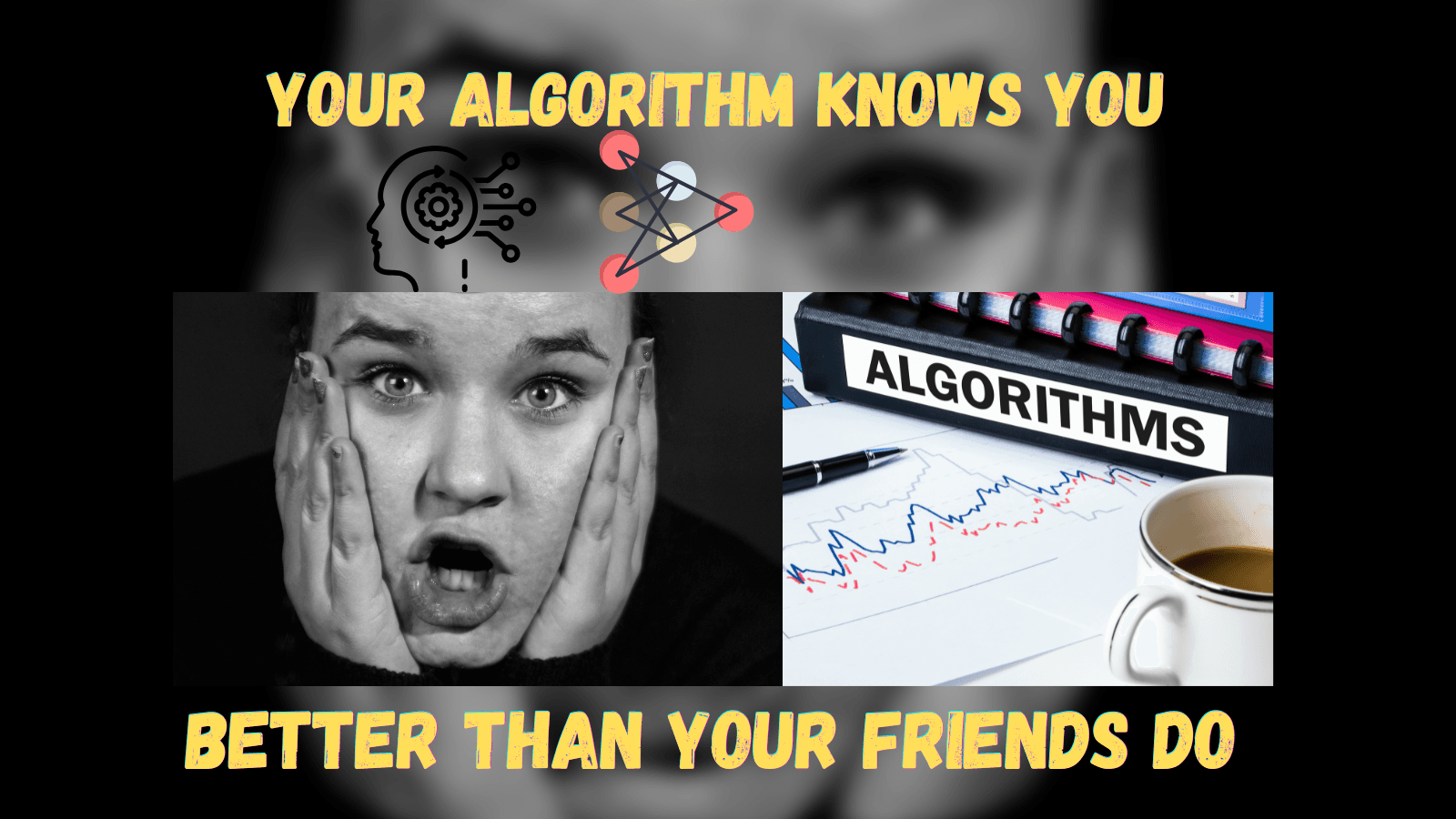
Your Algorithm Knows You Better Than Your Friends Do
Social Media: The Great Illusion
You open the app, and the first video is exactly what you needed: a recipe, a joke, a song you forgot you loved. It feels as if the app knows you.
In a way, it does.
As countries debate under-16 bans, the UK announced plans in June 2026 to restrict social media for young people, and it has also been consulting on limits to addictive features such as infinite scrolling. The feeds that “know you” are now a political topic.
10-SECOND VERSION: In a 2015 study, a computer that read a person's Facebook Likes judged their personality better than a friend could, after only 70 Likes.
10 Likes beat a coworker. 70 beat a friend. 150 beat a family member. 300 beat a spouse.
What People Say....
No algorithm can know me better than the people who love me.
Research
In 2015, researchers Wu Youyou, Michal Kosinski and David Stillwell published a study in the journal PNAS. They collected personality questionnaires from 86,220 Facebook volunteers. Then they checked how close different judges came to each person's own answers. Friends and family judged with a short questionnaire. A computer used each person's Facebook Likes.
The computer was closer to the person's own rating than a work colleague after 10 Likes, a friend or roommate after 70, a family member after 150, and a spouse after 300.
Your friends know your story. The algorithm knows your patterns.
The Mirror Effect
We feel known by an algorithm because it reflects us back to ourselves. But being predicted is not the same as being understood. An algorithm can guess what you will click. It cannot know why you cried at that song.
This is my opinion, but it is worth thinking about.
Experience
You show a friend your feed. She laughs: “That is so you.” It is true, and a little strange that a machine learned it from your taps.
My Question
If a machine can predict me, how much of my taste is really my choice?
On the Other Hand
The study measured broad personality traits using Likes on one platform in 2015. “Better” meant closer to the person's own self-rating, not a perfect picture of who they are. The authors noted that people may still judge some traits better than computers, for example traits that show in behavior that leaves no digital footprint.
Algorithms can predict, but friends can care, forgive and surprise you. And the research also raised serious privacy questions.
The Stark Reality - Truth
Partly true. With enough data, algorithms can predict some personality traits better than people close to you. But predicting is not understanding, and it comes with privacy risks.
The Significance
What does it promise? That no machine can know you like your friends.
What does the evidence show? That a computer using Likes matched or beat the people around you at judging broad personality traits.
What should you do? Check your privacy settings, and keep the parts of you that cannot be clicked.
Be Brave.
In this series we asked whether anyone is real, whether influencers are friends, whether feeds show reality, whether viral is success, whether social media is social, and whether photos are memories. Here is the last question: what do you want people, and machines, to know about you?
Frequently Asked Questions
Can an algorithm really know my personality?
In a 2015 study, a computer using Facebook Likes predicted self-rated personality traits better than a friend after about 70 Likes. It predicts broad traits, not your whole life or your feelings.
Does the algorithm know my private thoughts?
No. It uses your behavior, such as clicks, Likes and watch time, to make predictions. It does not read minds, but behavior can reveal a lot.
How can I protect my privacy online?
Review app permissions, limit data sharing, reset ad personalization, and think before you Like or share sensitive content. The settings differ by platform.
Can I reset my feed?
Many apps let you adjust your interests, mute topics or clear your history. Check the settings of each app, because the options change often.
English Lesson: Talking About Data and Privacy
Every article on this blog is also an English lesson. Read slowly, say the new words out loud, and use them today.
New Words
predict (verb) means to say what will happen or what someone will do. The app predicts what I want to watch.
personality (noun) means the qualities that make you different from other people. She has a warm personality.
privacy (noun) means the right to keep your personal life secret. I care about my online privacy.
digital footprint (noun phrase) means the trail of data you leave online. Your digital footprint shows what you like.
track (verb) means to follow what someone does. Some apps track your location.
data (noun) means facts and numbers collected for analysis. Companies collect data about our habits.
Say This, Not That
Say “The app seems to know my taste.”
Don't say “The app knows everything about me.”
Why? The first sentence is accurate. The second is an exaggeration.
Say “I'd like to check my privacy settings.”
Don't say “It doesn't matter. Everyone has my data anyway.”
Why? You still control some settings.
Say “My friends know me better than the app does.”
Don't say “The algorithm understands me more than my family.”
Why? Prediction is not the same as understanding.
Grammar Spotlight: comparing with “than” + auxiliary
After than, we often repeat the auxiliary verb (do / does / did / is / can) so that we do not repeat the whole sentence.
She knows me better than I do. (= than I know myself)
My friends know me better than the app does.
He earns more than she does.
Common mistake: Use the correct auxiliary and the correct form.
Incorrect: He earns more than she earn.
Correct: He earns more than she does.
Quick Practice
She plays chess better than I ___. (do / am)
My friends know me better than the app ___. (do / does)
Fix the mistake: He earns more than she earn.
Answers: 1. do · 2. does · 3. He earns more than she does.
You finished the whole Social Media series! Which lesson changed your thinking most?
Enjoyed this lesson? Subscribe to English with Sue and become an active student. Every article gives you new words, useful phrases and one grammar point. Today's challenge: write one sentence with a new word and say it out loud.