AI: The New Uncomfortable Truth
The Internet Is Becoming a Very Convincing Lie
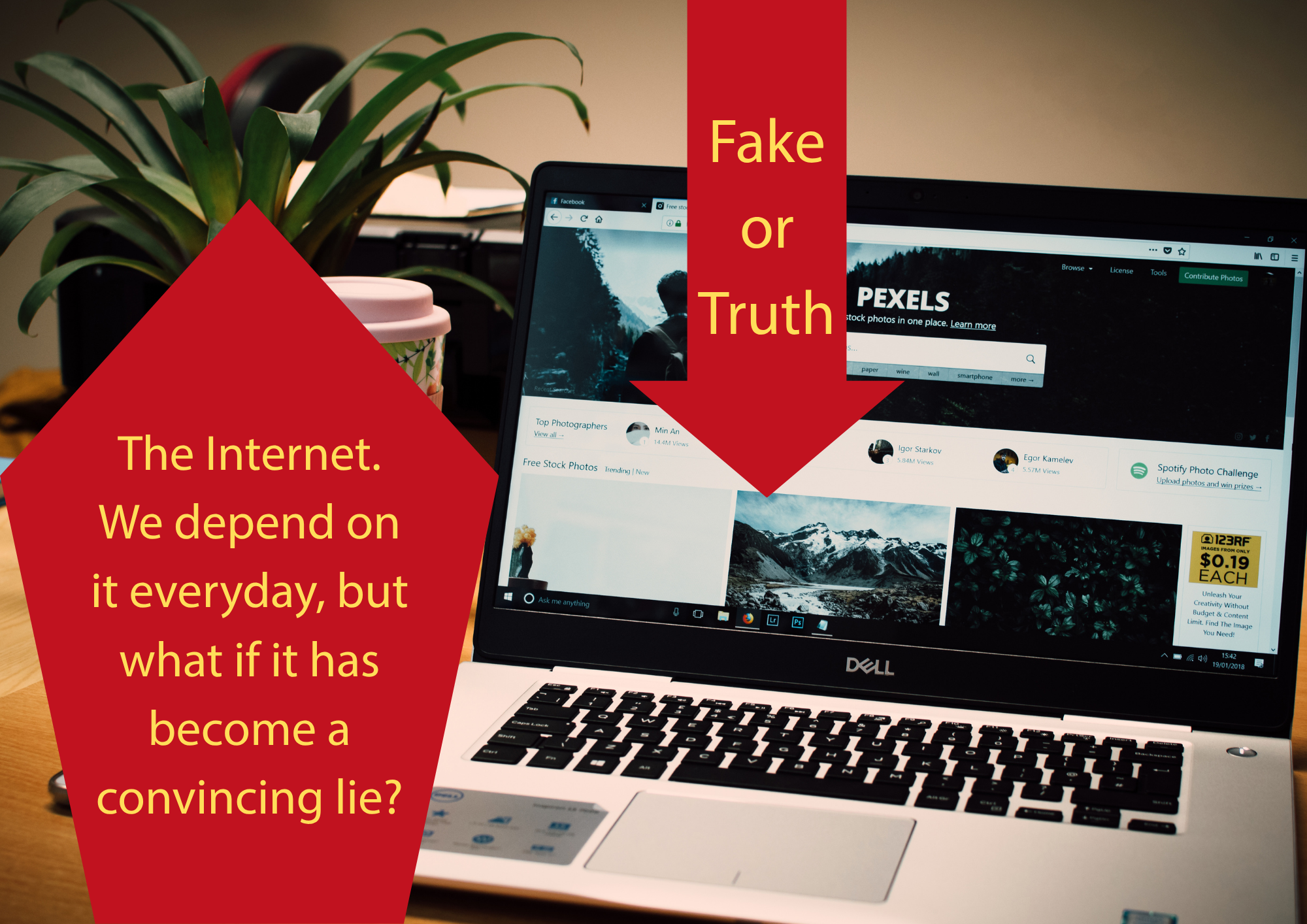
The Death of Authenticity — Part 2
In March 2026, during the war with Iran, Israel's prime minister released a video. He was alive. He was speaking. It was real.
Some people didn't believe it.
Not because it looked fake. Because so much AI-generated war footage was already flooding the internet that a real video from an actual head of state got treated like everything else online: maybe true, maybe not, who can even tell anymore.
Sit with that for a second.
The problem here wasn't a fake video fooling people. It was a real video failing to convince anyone.
That's a much stranger problem than the one we usually talk about.
The Claim
Here's the story we're told: AI-generated content is dangerous because it fools us. We'll see a fake video, believe it, and act on a lie.
That's true. It happens constantly. But it's only half the story, and maybe not the more dangerous half.
The Investigation
Let's start with scale. Deepfake volume online went from around 500,000 pieces of content in 2023 to roughly 8 million by 2025, a sixteen-fold jump in two years. Europol has projected that as much as 90% of online content could be synthetically generated by 2026.
Most of us cannot spot it.
A 2025 study by identity-verification firm iProov tested 2,000 consumers on real versus AI-generated content. Only 0.1% got every single one right. Not most people did poorly, almost everyone did.
The financial cost is already enormous. In 2024, a deepfake fraud attempt happened somewhere in the world roughly every five minutes, according to Entrust's Identity Fraud Report. The most famous single case: engineering firm Arup lost $25.6 million in one day after an employee joined a video call with what looked and sounded exactly like several real colleagues, all AI-generated, live, in real time.
So yes. Fakes fool people. Expensively.
But here's the part almost nobody talks about.
The Contradiction
Legal scholars Bobby Chesney and Danielle Citron gave this next part a name years ago: the liar's dividend.
Here's how it works. Once everyone knows convincing fakes exist, a guilty person doesn't need to prove a real video of them is fake. They just need to suggest it might be. Doubt is enough.
You don't have to fool anyone. You just have to make truth optional.
This isn't theoretical. In 2025, viral deepfake stories falsely claimed things about journalist Rachel Maddow, a secret daughter, a Texas home purchase, an emergency flood rescue. She went on air and denied all of it, clearly and directly. Some people still didn't believe her denial. The fake had already done its job.
And in 2026, researchers at the University of Würzburg ran an experiment that should worry you more than any deepfake video itself. They showed people an authentic video of a political leader, then told some participants it was fake. Those participants rated the leader more favorably than the group who was told the truth — even though nothing about the video had changed. Just calling something fake changed how people judged it.
The lie doesn't have to work. Just saying "that's probably AI" is enough to make an inconvenient truth disappear.
That flips the whole premise of this article on its head. The internet isn't just becoming a place where lies look true.
It's becoming a place where true things can be waved away as lies, and that's the more dangerous half.
The Human Question
This stops being an abstract media-literacy problem the moment it happens to you personally.
Imagine you have real footage of something that actually happened, an apology someone owes you, evidence of something unfair, proof you were right. Now imagine the person on the other end just says: "That's AI. That's not real." And imagine some of the people around you nod along, because why wouldn't they, everyone knows fakes are everywhere now.
You did nothing wrong. You have the truth. And you still might not be believed.
That's not a hypothetical about elections or war zones. That's a text thread. A workplace dispute. A family disagreement. The liar's dividend doesn't check your job title before it starts working.
The Uncomfortable Question
If the truth can be dismissed just as easily as a lie can be believed, what's actually the more valuable skill right now: telling real from fake, or being someone people still trust even when you can't immediately prove you're right?
The Other Side
To be fair, this isn't a one-sided collapse. Real infrastructure is being built, fast.
In May 2026, OpenAI and Google aligned on a shared approach: pairing C2PA "content credentials" (a signed record of where a file came from) with SynthID, an invisible watermark. Google DeepMind has now watermarked over 100 billion images, videos, and audio files. TikTok has labeled over 1.3 billion videos with AI provenance data. And on August 2, 2026, the EU's AI Act started requiring machine-readable labels on AI-generated content, with fines up to €15 million or 3% of global revenue for companies that skip it.
That's a real, fast-moving response, not nothing.
The honest limitation: a screenshot or a re-upload strips most of that protection instantly, and most content already online still carries no credential of any kind. The tools are arriving. They haven't caught up yet.
The Verdict
Partly true, and getting worse in a specific direction.
It's true that fakes are fooling people, and that's costing real money and real trust. But the sharper, less-discussed danger is the opposite: real evidence increasingly gets dismissed as fake, by people who have every reason to want it to be. Detection tools are improving. So is the incentive to just say "that's AI" and walk away from anything inconvenient.
The Authenticity Test
Is it real? Did this actually happen, exactly as shown, or was some or all of it fabricated?
Is it human? Was a person actually behind the camera, the voice, the moment, or did a machine generate it?
Does it matter? Even with honest answers to both, will the people around you actually believe them?
That third question used to be a formality. It isn't anymore.
Your Turn
If you had real proof of something that happened to you, and someone confidently told the people around you it was "obviously AI", what would you actually do next?
More articles

You Don't Need to Become a Better Version of Yourself
Sometimes Walking Away Is the Healthiest Form of Love

Being Alone Isn't the Same as Being Lonely