AI: The New Uncomfortable Truth
What If Authenticity Is Dead Already?
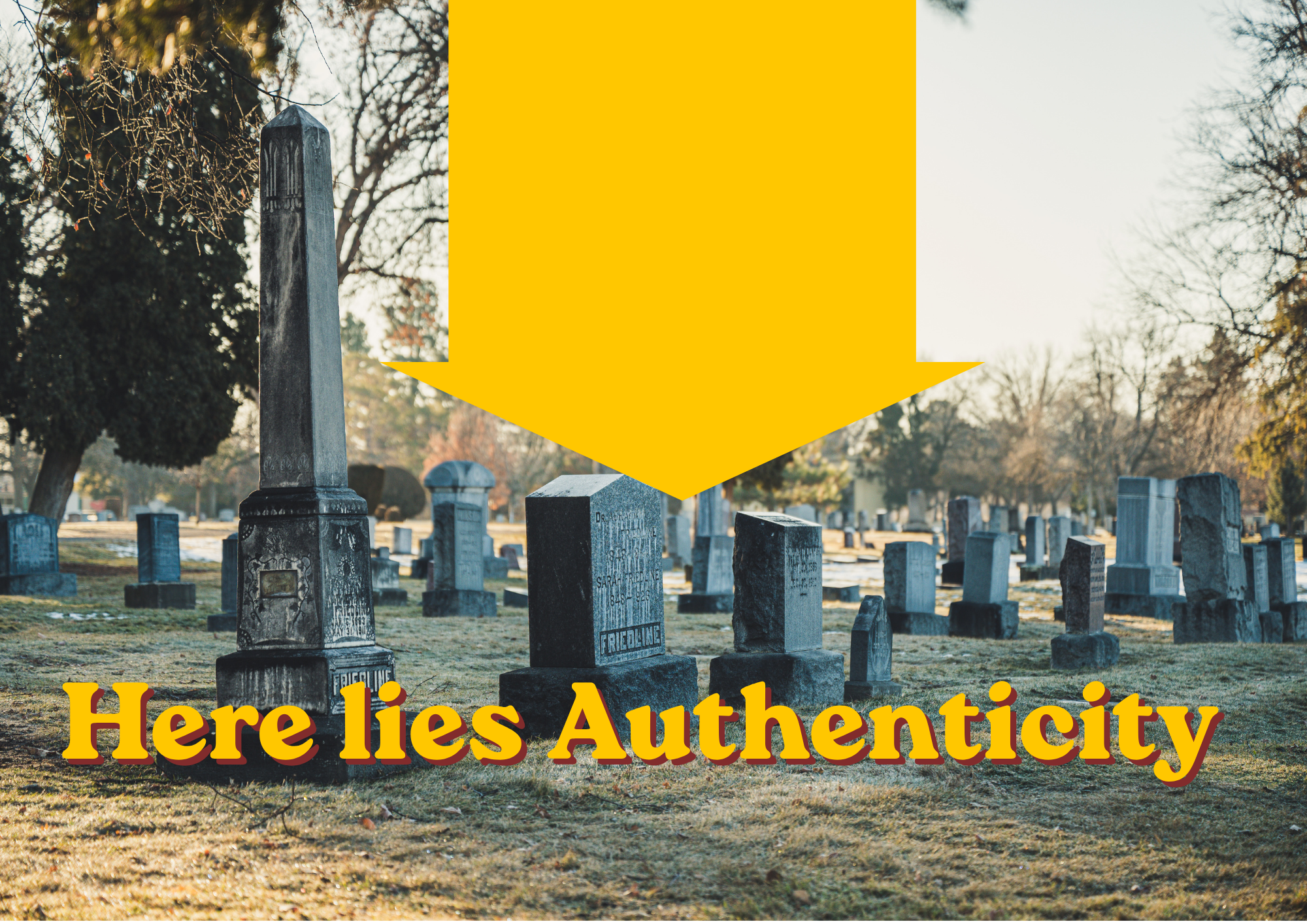
The Death of Authenticity
You follow someone for eight months.
You like her captions. Her bad lighting. The way she talked about her breakup last spring, it made your own breakup hurt a little less.
Then you find out: she's not real.
Not "she uses filters" not real. Not "she has a ghostwriter" not real. A computer made her. Every word. Every photo. Every breakup.
This isn't a hypothetical anymore.
On August 31, 2026, Instagram made it official. The company announced it will now hide accounts built around an AI-generated person if they don't label themselves clearly. Their reason was simple: people kept telling Instagram they felt tricked, following someone they thought was human, only to find out later she wasn't.
So let's ask the question nobody wants to ask.
What if authenticity isn't dying? What if it already died, and we're just getting the paperwork now?
The Claim
Here's the story everyone tells: AI is killing authenticity. Real people are getting drowned out by fakes. Platforms are scrambling to protect us.
It's a neat story. It's also missing something.
It assumes what we called "real" before AI showed up... actually was.
The Investigation
Let's look at the numbers.
Lu do Magalu started as a simple customer-service bot for a Brazilian store. Today she has over seven million followers, more than most human influencers will ever have. Lil Miquela has had brand deals with Prada, Calvin Klein and Samsung since 2018. In 2026, her AI-made music EP pulled tens of millions of streams in its first month. These aren't gimmick accounts anymore. They're a real business.
Here's the twist, though.
Once people find out an account is AI, and it says so honestly, they mostly don't care.
Creators building these accounts in 2026 say something surprising: pages that label themselves "AI-generated" get almost the same engagement as human creators in the same niche. Nobody's punishing them for being fake. Only for pretending not to be.
But zoom out, and the overall mood is souring. Enthusiasm for AI-made creator content dropped from about 60% in 2023 to roughly 26% in 2025, even while brands keep pouring more money into it. And a June 2026 study by the video tool Kapwing found that 59% of videos shown to a brand-new TikTok account counted as low-effort "AI slop."
AI can scale content. It cannot scale trust.
Contradiction
The popular story starts to fall apart at this point
If AI itself were the problem, telling people wouldn't help. A labelled fake would still just be a fake. But it does help. Engagement holds up fine once people are told the truth.
So the problem was never really "is this made by AI."
The problem was always: did you lie to me about it.
Instagram's own rule proves this. If you're a real person using AI tools to edit your own photos, nothing changes for you. Instagram isn't policing AI. It's policing dishonesty.
Which means the real question isn't "did AI kill authenticity." It's this: was "authenticity" ever really about a human being on the other end? Or was it always just about not getting lied to?
If it's the second one, nothing died. We just found out how much of what we called "real" before was never actually being checked either. It just hadn't been caught yet.
The Human Question
Take the marketing angle away, and this gets heavier fast.
Studies on AI companionship have found something odd: talking to a chatbot can genuinely make people feel less lonely, in some studies, about as much as talking to an actual person. Researchers keep landing on the same reason why: people feel heard. Something responding to you, warmly and consistently, does something, even if you know exactly what's on the other end.
But here's the catch.
A 2026 study followed over 2,000 people across four countries for a full year. It found that people who leaned on chatbots more over time got lonelier, not less. The comfort was real in the moment. It didn't add up to anything lasting.
Feeling understood in the moment, and actually being known over time, are not the same thing. AI is very good at the first one. It cannot do the second.
The Uncomfortable Question
If a feeling is real, does it matter what caused it?
Neither easy answer feels right. "No, it doesn't matter" makes anyone who feels hurt sound irrational. "Yes, it matters completely" makes every good moment you had with a labelled AI account or app suddenly worthless, which doesn't match how good it actually felt at the time.
Maybe the honest answer is smaller than either one:
It doesn't matter for whether you felt something. It matters completely for whether a relationship actually existed.
Because a relationship needs two people who can choose you back. A feeling doesn't.
The Other Side
Here's the strongest argument against everything above, and it deserves a fair hearing.
Humans have bonded with things that can't love them back for a very long time. Mascots. Fictional characters. Radio hosts they never met. This isn't new. Researchers who study these one-sided bonds say they can genuinely help, a safe place to open up, especially for people who feel isolated, as long as it doesn't replace real connection entirely.
By that argument, "the death of authenticity" is just a dramatic name for something old. AI didn't invent this. It just made it easier, more convincing, and more available.
Fair point. It still doesn't explain why Instagram needed a brand-new rule this year, built entirely around people feeling tricked.
The Verdict
Partly true. Partly misleading.
Authenticity isn't dead. But the old version of it, made by one identifiable human, no machine involved, mostly unplanned, is gone, and it's not coming back, not any time soon.
What's replacing it is smaller and more honest: just tell me the truth about what I'm looking at.
That's not nothing. But it's a much smaller promise than "authentic" used to make, and pretending otherwise won't help anyone figure out what's actually in their feed.
The Authenticity Test
Three questions used to be one question. Now they're three, and it's worth learning to ask them separately.
Is it real? Did this actually happen and get seen by real people, or was it made up entirely?
Is it human? Was there an actual person behind it, or did a machine make the whole thing?
Does it matter? Given honest answers to the first two, does the source actually change what this means to you?
An AI influencer's post can be real (it exists, it was posted, real people saw it) without being human. Whether that matters probably depends on why you followed the account in the first place.
Your Turn
Say, for example, an account helped you through something hard, really helped. Then you found out it was AI the whole time.
Would that discovery undo the help it gave you? Or just the relationship you thought you had with whoever you assumed was behind it?
More articles
You Don't Need to Become a Better Version of Yourself
Sometimes Walking Away Is the Healthiest Form of Love

Being Alone Isn't the Same as Being Lonely