
Getting Older
The Percussion Section (a.k.a. My Knees and Hips) 3
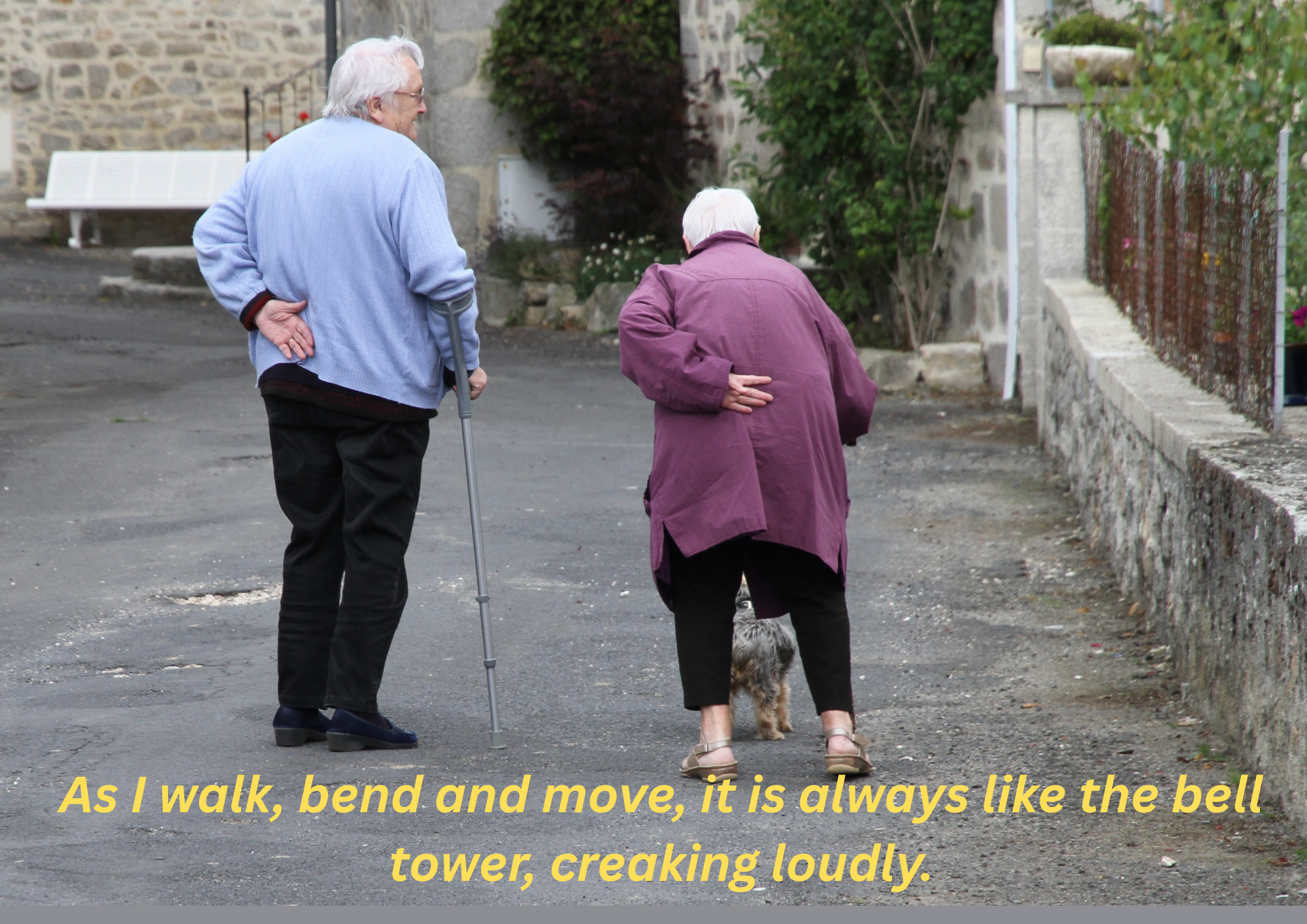
🦴 Stand up after sitting too long, and your knees announce it to the whole room like a tiny fireworks display. Today: why your joints crack, whether it's actually bad for you, and how I went from silent ghost to my own personal percussion section.
Getting Older, Post 3: The Percussion Section (a.k.a. My Knees)
A few years ago, I could hear my husband walking down the passage, getting up, sitting down — always that cracking sound as he moved. Crack, um, crack, um. To me, it was completely normal. It was his thing. Meanwhile, I could walk up a flight of stairs, tiptoe around the house, and give people a genuine fright, because I moved in total silence. Like a ghost, I'd just suddenly appear behind someone. It was hilarious.
My body has since beaten me to the punch. These days, it announces me before I even arrive. It shouts to everyone, "Sue is on her way" — crack, crack, crack. One day it's coming from my knee. Two days later, it sounds like it's my hip, except now it's more of a thud. Glup-one, glup-one.
It seems I've trained my bones exceptionally well, because now, when I exercise, I don't even need background music. I am, apparently, a dual package — workout and soundtrack included, no extra charge.
I genuinely thought no one else could hear it, until my husband very helpfully advertised it to an entire room of people: "You know your bones are clicking?" Really! As if I hadn't already noticed my own personal orchestra following me from room to room.
The Science: What's Actually Making That Sound?
That satisfying (or alarming, depending who's listening) crack isn't your bones grinding together, and it isn't your joints "wearing out." Your joints are cushioned by a lubricating fluid called synovial fluid, which contains dissolved gases — mostly carbon dioxide, nitrogen, and oxygen. When you stretch or bend a joint suddenly, the space inside the joint capsule expands, pressure drops, and those dissolved gases rapidly form a tiny bubble. That bubble popping is the actual "crack" you hear — a process with the wonderfully dramatic name tribonucleation.
Here's the part that surprises most people: cracking your joints, on its own, has not been shown to cause arthritis or joint damage, according to the research on this. It happens more often as we age simply because our joints undergo natural changes — slightly less cartilage cushioning, and ligaments that have loosened a little over the decades — which makes that gas bubble easier to trigger.
And once again — this isn't just a human quirk. Joint cracking happens across many animals with similar joint structures. Growing older and creakier is, quite literally, a universal experience for anything with a skeleton.
What Actually Helps
- Keep moving, gently. Regular low-impact movement (walking, swimming, cycling) keeps joints lubricated and mobile — stiff, unused joints tend to crack and ache more, not less.
- Build the muscles around your joints. Stronger surrounding muscles take pressure off the joint itself, particularly around knees and hips.
- Stretch regularly. Consistent, gentle stretching maintains range of motion and reduces stiffness.
- Watch your weight. Extra body weight adds real, measurable extra load to weight-bearing joints like knees and hips.
- Stay hydrated. Synovial fluid needs water to function properly — dehydration can make joints feel stiffer.
- Eat anti-inflammatory foods. Omega-3 rich foods (fish, flaxseed, walnuts) are linked to reduced joint inflammation over time.
Here's the Part Worth Remembering
Yes, the cracking is real, and no amount of ignoring it makes the soundtrack disappear. But here's the truth underneath the noise: those knees have carried me up mountains, through decades of dancing badly at weddings, and through every single flight of stairs I ever tiptoed up to scare someone. A little percussion is a small price for a body that's actually been used, fully, for a long and genuinely good life. The youth have quiet joints because they haven't done enough yet to earn the noise. I'll take the soundtrack.
English Corner: Bone and Joint Idioms
- "Knuckle down" — to start working seriously. "It's time to knuckle down and finish this project."
- "Get a leg up" — to get an advantage. "That internship gave her a leg up in the job market."
- "Bone-tired" — extremely exhausted. "After that hike, I was bone-tired."
Try this today: Use one of these three idioms out loud, about your actual day — bonus points if your knees agree with the theme.
Quick Check: Tap to reveal the answer
Question: What actually causes the "crack" sound in your joints?
Answer: A gas bubble forming and popping inside the joint's synovial fluid — a process called tribonucleation — not your bones rubbing together.
More articles


