
Relationships: Things Nobody Wants to Admit
When They Stop Fighting, That's the Warning Sign
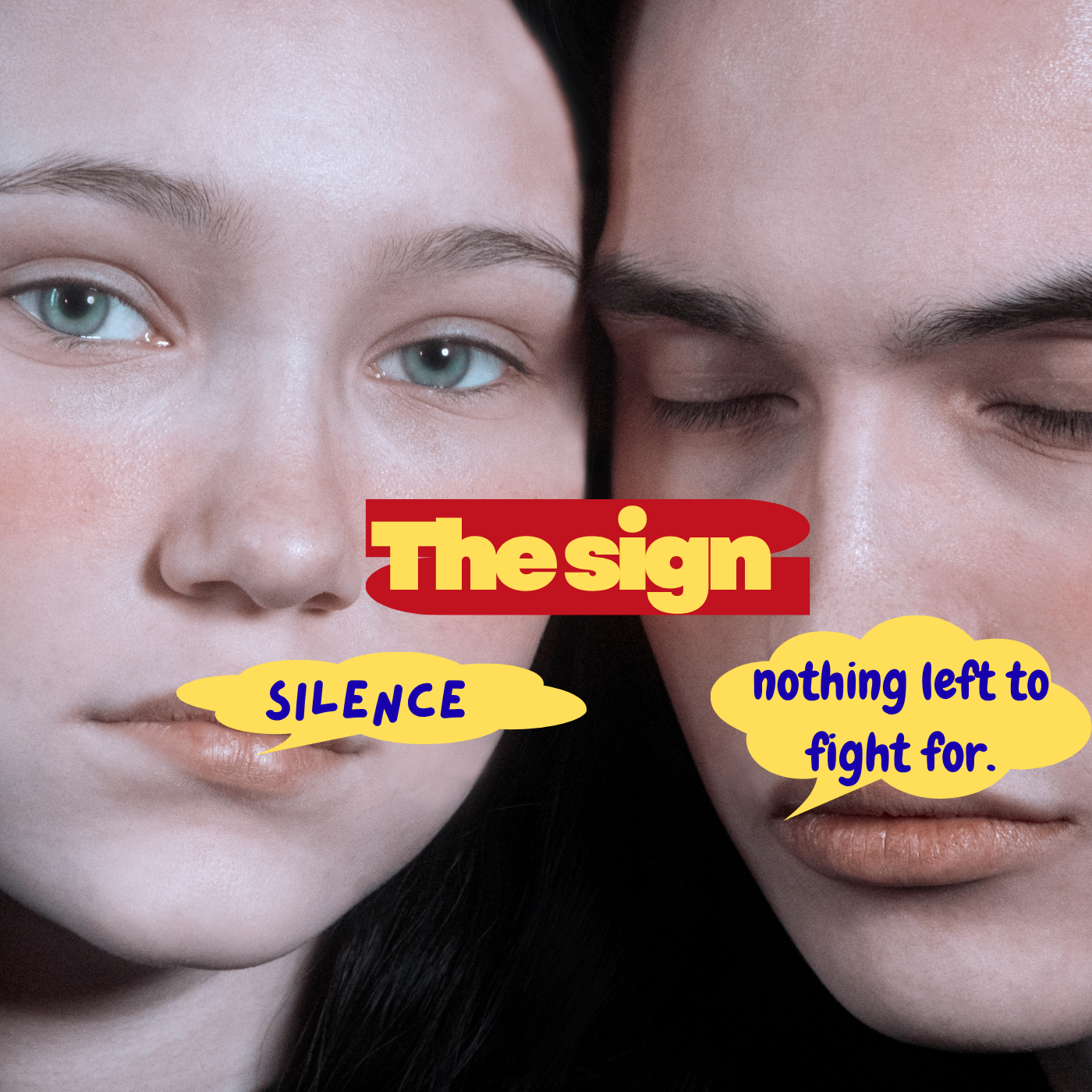
Relationships: Things Nobody Wants to Admit.
She said it almost proudly, over coffee: "Honestly, we barely fight anymore." I remember nodding, the way you're supposed to. Good for them. Except something in how she said it didn't sound like peace. It sounded like tired.
We're taught to treat silence as the finish line. Fewer arguments, less tension, everybody assumes that means a couple finally figured it out. Nobody warns you that silence can mean something else entirely, that two people can simply stop bothering to disagree, because somewhere along the way, they quietly stopped expecting anything to change.
This is the part that surprised me most when I first read it: John Gottman, who's spent more time watching real couples argue than almost anyone alive, found that it isn't the shouting that predicts a relationship ending. It's what he calls "stonewalling", one partner emotionally checking out of a conversation, going quiet, shutting the door, physically still in the room but somewhere else entirely. Out of everything he measured, stonewalling was one of the strongest signs a relationship was in real trouble.
The detail that stayed with me: Gottman's team could sometimes predict, with real accuracy, whether a couple would separate, not from how often they fought, but from how often small, ordinary moments of reaching out got ignored. A comment about the weather. A sigh across the room. A "look at this" over a phone screen. He called these "bids for connection." Couples who kept turning toward each other's bids, even during rough patches, tended to stay close. Couples who quietly stopped turning toward them didn't need to fight anymore. There was nothing left to fight about, not because it was resolved, but because nobody was reaching anymore.
I don't think this means every quiet couple is in trouble. That would be its own kind of lie, dramatic, but not true. Plenty of couples genuinely work through their hardest conflicts and land somewhere calmer, together, on purpose. The difference isn't the silence itself. It's what's sitting underneath it: warmth that's still there, just quieter, or distance that's learned to look like peace because nobody's naming it out loud.
So if "we don't really fight anymore" is true for you, it might be worth one honest, unglamorous question, the kind nobody puts on a poster: when's the last time one of you reached for the other, in some small way, and the other one actually turned toward it?
Words for every level, B1 to C2
silence (noun, B1) is the absence of sound or talking. The silence between them felt heavy.
tension (noun, B1) is a feeling of stress or unease between people. There was less tension, but also less talking.
check out (of something) (phrasal verb, B2) means to stop paying attention or being emotionally present. He checked out of the conversation completely.
reach for/reach out (phrasal verb, B2) means to make an effort to connect with someone. She reached out with a small comment, hoping he'd respond.
stonewalling (noun, C1) is refusing to engage or respond, shutting down a conversation completely. Stonewalling is one of the strongest predictors of a relationship ending.
underneath (preposition, used abstractly, C2) means the real feeling or cause hidden beneath the surface of something. What's sitting underneath the silence matters more than the silence itself.
Quick Check
Tap to test yourself before you keep scrolling.
Reveal the answer
Question: According to Gottman's research, what predicted a couple separating more accurately than how often they fought?
Answer: How often small "bids for connection", little moments of reaching out, were ignored, rather than turned toward.
Go on, challenge yourself.
Write two or three sentences in the comments. Use at least two words from the English spotlight. Start with: "I try to turn toward the people I love when..."
Turn This Lesson Into Real Speaking

You simply read real vocabulary and phrases, the next step is using them out loud. Join Sue for structured lessons that take you from understanding English to speaking it with confidence, at your level.
More articles

Most Fights Never Get Solved. They Just Get Managed.

The Relationship Nobody Teaches You to Build

Empowerment Has Become Another Thing Women Have to Perform