
Fluency tips
Getting Older, Post 8: The 5am Club Nobody Signed Up For
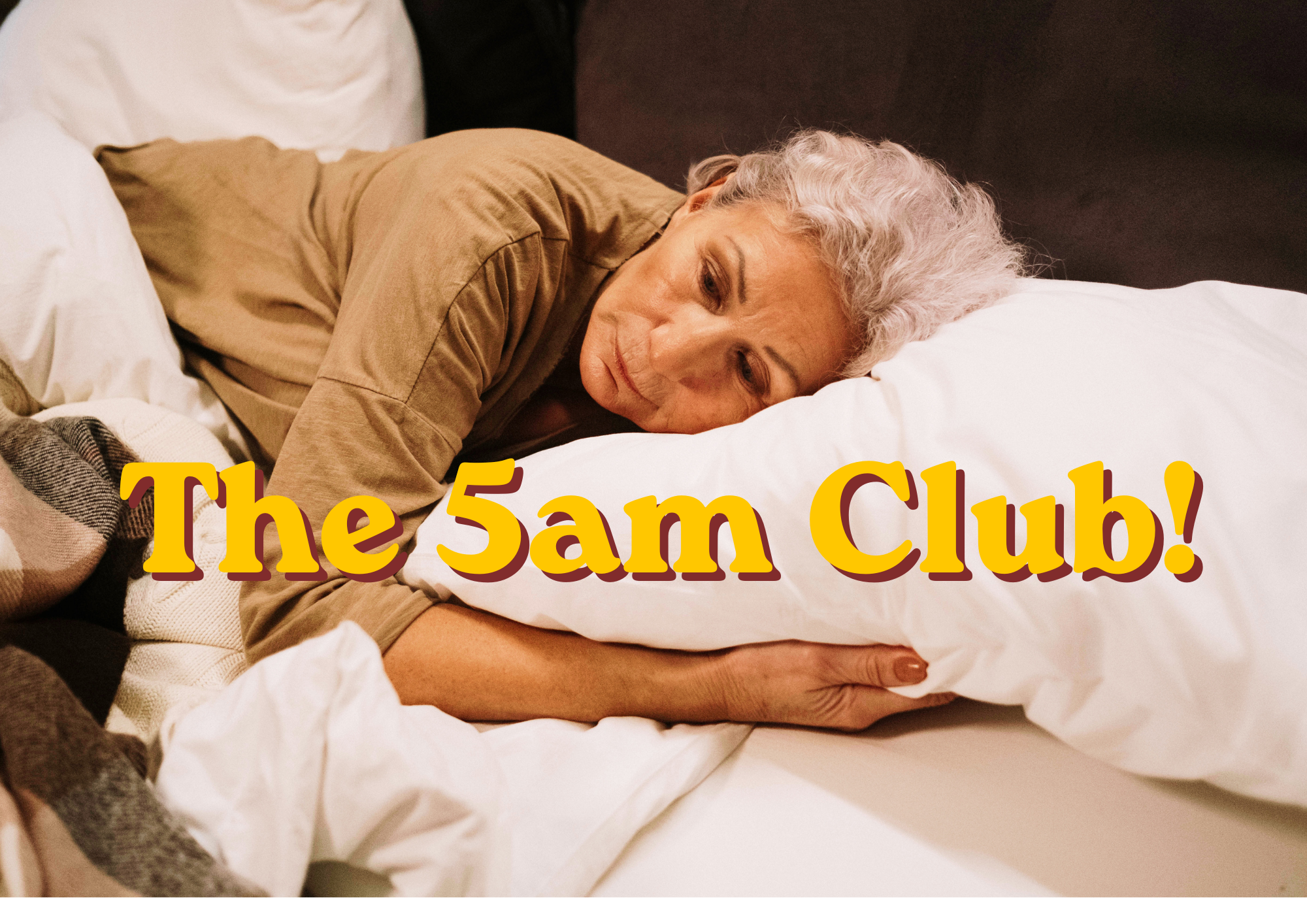
You used to sleep until noon on a good day. Now you're wide awake at 5am, staring at the ceiling, for absolutely no reason. Today: why sleep changes as we age, and why beauty sleep might be the biggest myth of them all.
Getting Older, Post 8: The 5am Club Nobody Signed Up For.
Somewhere I read that every woman needs her beauty sleep, hence the saying, "make sure you get at least 8 hours of sleep every night." That means I'll stay beautiful, right? So why, exactly, do time and age then decide we don't need 8 hours anymore? As we age, it becomes less and less, and added to that are the bathroom trips, 3 to 4 times a night. I don't know about you, but it adds dark circles under my eyes, more wrinkles, and somehow, so much more energy, with absolutely nothing to burn it off on.
Book a one-night stay at our home, and you're in for a real treat. No sleep guaranteed! You can watch the night patrol, each one heavily armed with full bladders, heavy eyelids, flushing the loo, opening and closing the fridge, changing from winter PJs to summer ones because of hot flushes. Who can possibly sleep during this racket? You know exactly what I'm talking about.
The Science: Why Sleep Changes As We Age
That sudden 5am wake-up call isn't random, and it isn't insomnia in the way most people picture it. As we age, our circadian rhythm, the internal body clock that governs when we feel sleepy and alert, gradually shifts earlier. This is partly driven by changes in melatonin production, the hormone that signals "time for bed" to your brain. Older adults tend to produce melatonin earlier in the evening and in smaller amounts overall, which nudges both bedtime and wake time earlier, whether you asked for it or not.
On top of the timing shift, sleep also becomes lighter and more fragmented with age. The amount of deep, slow-wave sleep, the most restorative stage, naturally declines, meaning older adults spend more time in lighter sleep stages and wake more easily from small disturbances, a noise, a full bladder, or an entire nightly night patrol involving the fridge, the loo, and a full pajama change.
And that "beauty sleep" saying isn't entirely a myth either, deep sleep really is when the body carries out repair processes, including skin repair. The frustrating irony: just as skin actually needs that deep repair sleep most, age reduces exactly how much of it we get.
And, as always in this series, not just a human pattern. Many animals show measurably lighter, more fragmented sleep as they age too. The night patrol is, apparently, a universal biological memo nobody can opt out of.
What Actually Helps
Keep a consistent sleep schedule. Going to bed and waking up at similar times daily reinforces your circadian rhythm rather than fighting it.
Get bright light exposure in the morning. Morning sunlight helps regulate melatonin timing and can reduce overly early waking over time.
Limit fluids a couple of hours before bed. This won't eliminate nighttime bathroom trips entirely, but it can genuinely reduce how many times the night patrol has to march.
Keep the bedroom cool, dark, and quiet. Since sleep is lighter with age, minimizing disturbances matters more than it used to, including layering pajamas for easy mid-hot-flush changes.
Stay physically active during the day. Regular exercise is linked to deeper, more consolidated sleep at night, and gives all that extra energy somewhere real to go.
Don't panic about waking early. If you feel rested and alert during the day, an earlier natural wake time isn't a problem to fix, it may just be your new normal rhythm.
Here's the Part Worth Remembering
Yes, the 5am wake-ups are real, the night patrol is real, and no amount of blackout curtains fully turns back your internal clock. But here's the upside nobody advertises: you get first access to the quietest, calmest hours of the day, uninterrupted, all to yourself, while the rest of the world is still asleep. The youth are missing the best light of the morning entirely, and frankly, they've never once had to coordinate a pajama change mid-hot-flush at 3am like a seasoned professional. We're just up early enough to actually see the sunrise, dark circles and all.
English Corner: Sleep Idioms
"Sleep on it" means to wait until later to decide something. "I'm not sure, let me sleep on it."
"Up at the crack of dawn" means waking up very early. "She's up at the crack of dawn every day now."
"Hit the hay" means to go to bed. "I'm exhausted, time to hit the hay."
Try this today: Use one of these three idioms out loud, about your actual sleep schedule, bonus points if it happened before sunrise.
Why do older adults often wake up earlier than they used to?
Question: Why do older adults often wake up earlier than they used to?
Answer: Age-related shifts in melatonin production move the circadian rhythm earlier, and sleep also becomes lighter and more easily disrupted, both of which push wake time earlier.